
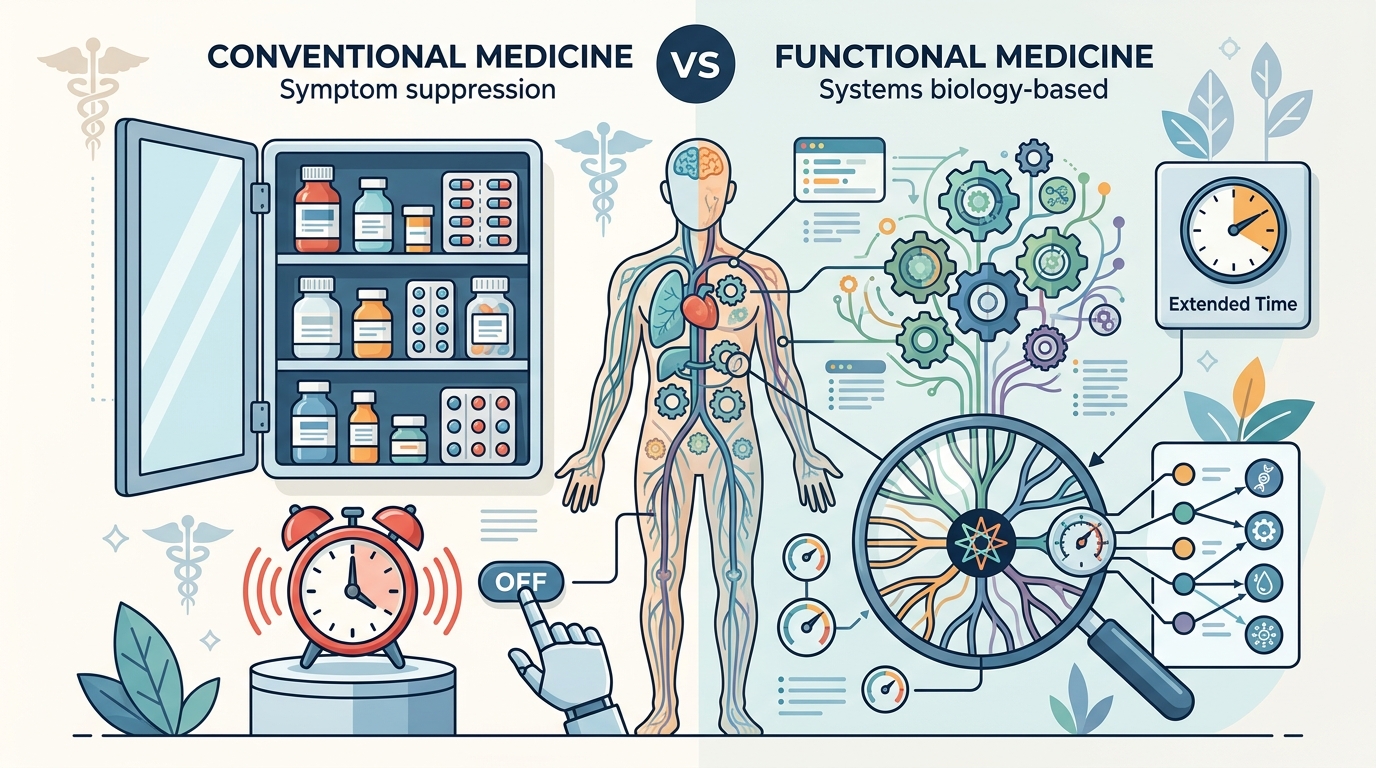
Functional medicine is a systems biology-based approach that focuses on identifying and addressing the root cause of disease rather than merely suppressing symptoms. This paradigm shift is critical because conventional medicine often treats chronic conditions as isolated events. According to the Institute for Functional Medicine, functional medicine practitioners spend significantly more time with patients to uncover complex interactions within the body. This detailed investigation allows for personalized care plans that address the whole person. The goal is to restore balance and promote optimal health through targeted interventions. (Functional Medicine Integrative Functional)
Root Cause Analysis vs Symptom Management
The most significant difference lies in how each system views illness. Conventional medicine is often reactive. It excels in acute care, trauma, and infectious diseases where immediate intervention is necessary. However, it often struggles with chronic conditions like autoimmune disorders, metabolic syndrome, and hormonal imbalances. Functional medicine is proactive and investigative. It asks why a disease developed in the first place.
Functional medicine is defined as a science-based discipline that uses detailed histories to uncover the underlying causes of chronic disease. Practitioners look at the complex web of interactions between genetics, environment, and lifestyle. This approach recognizes that every patient is unique. Two people with the same diagnosis may have different root causes. Therefore, their treatment plans must also differ. This personalized strategy aims to heal the body rather than just manage the condition.
Conventional medicine typically follows a standardized protocol for specific diagnoses. If a patient has high blood pressure, the standard response is medication to lower it. While this manages the number, it does not address why the blood pressure rose. Functional medicine would investigate dietary habits, stress levels, sleep quality, and gut health. These factors often contribute to cardiovascular issues. By addressing these root causes, the need for long-term medication may decrease. This holistic view leads to more sustainable health outcomes.
The Patient-Centered Approach
Time and attention are valuable resources in healthcare. Conventional medicine often operates under tight schedules. A typical appointment may last only fifteen to twenty minutes. This constraint limits the ability to explore complex personal histories. Patients may feel rushed or unheard. The focus is often on the specific complaint rather than the individual.
Functional medicine prioritizes the therapeutic relationship. Practitioners spend more time listening to patients. They explore family history, past traumas, and daily routines. This deep understanding builds trust and empowers patients. When patients feel heard, they are more likely to adhere to treatment plans. This collaboration is essential for managing chronic conditions that require lifestyle changes.
Direct Integrative Care offers virtual assessments to make this personalized approach accessible. Patients can connect with Dr. Kim from the comfort of their homes. This convenience removes barriers to care. It allows for a more relaxed environment where patients can open up about their health concerns. The virtual format also enables practitioners to review detailed health records efficiently. This seamless integration of technology and care enhances the patient experience.
Diagnostic Methods and Testing
Diagnostics play a crucial role in determining the path of treatment. Conventional medicine relies heavily on standard lab tests and imaging. These tools are excellent for detecting acute abnormalities and structural issues. However, they often fall short in identifying subtle functional imbalances. For example, a patient may have normal blood sugar levels but still experience symptoms of insulin resistance. Standard tests might miss this nuance.
Functional medicine utilizes advanced and specialized testing. These tests look at cellular function, nutrient levels, and hormonal balance. They can detect issues before they manifest as full-blown diseases. This early detection allows for preventive interventions. Functional medicine is grounded in the understanding that health exists on a continuum. Small adjustments can prevent significant health declines.
According to research published in the Journal of Translational Medicine, functional medicine interventions can significantly improve patient outcomes in chronic disease management. These studies highlight the effectiveness of personalized nutrition and lifestyle modifications. By using these advanced diagnostics, practitioners can create precise treatment plans. This precision reduces trial-and-error in therapy. Patients benefit from targeted interventions that address their specific needs.
Treatment Philosophy and Lifestyle
Treatment in functional medicine is multifaceted. It combines conventional medical knowledge with complementary therapies. Nutrition, exercise, sleep, and stress management are core components. These lifestyle factors are not afterthoughts. They are primary drivers of health. Practitioners guide patients in making sustainable changes. This education empowers individuals to take control of their well-being.
Conventional medicine often relies on pharmaceutical interventions. Medications are vital for many conditions. However, they can sometimes introduce new side effects. Functional medicine seeks to minimize drug use when possible. It aims to restore the body's natural healing abilities. This approach reduces the burden on the liver and kidneys. It also promotes long-term vitality.
Integrative functional medicine is a practice that combines the best of conventional and functional approaches. It respects the efficacy of emergency care while embracing the depth of functional diagnostics. This hybrid model offers the best of both worlds. Patients receive immediate relief when needed. They also get long-term strategies for prevention. This comprehensive care model supports overall wellness.
Comparison of Medical Models
Understanding the distinctions helps patients make informed decisions. The table below summarizes the key differences between functional and conventional medicine.
| Feature | Conventional Medicine | Functional Medicine |
|---|---|---|
| Focus | Symptom suppression and disease management | Root cause identification and resolution |
| Approach | Standardized protocols for specific diagnoses | Personalized care based on individual biology |
| Time with Patient | Short appointments (15-20 mins) | Extended consultations (60+ mins) |
| Testing | Standard lab ranges and imaging | Advanced functional and specialized testing |
| Treatment | Primarily pharmaceutical interventions | Lifestyle, nutrition, and targeted supplements |
| Goal | Acute care and survival | Optimal health and prevention |
Key Takeaways
- Functional medicine is a science-based discipline that focuses on the root causes of disease rather than just symptoms.
- Conventional medicine excels in acute care but often lacks depth in managing chronic conditions.
- Personalized care is central to functional medicine, recognizing that each patient's biology is unique.
- Advanced diagnostic testing allows for early detection of functional imbalances before they become diseases.
- Lifestyle factors such as diet, sleep, and stress are treated as primary drivers of health.
- Integrative functional medicine combines the strengths of both systems for comprehensive care.
- Virtual assessments make specialized functional medicine more accessible to a wider audience.
Frequently Asked Questions
Is functional medicine covered by insurance?
Insurance coverage varies by provider and plan. Some tests and consultations may be covered, while others might not. It is best to check with your specific insurance company. Direct Integrative Care can provide detailed receipts for potential reimbursement.
How is functional medicine different from alternative medicine?
Functional medicine is evidence-based and grounded in scientific research. It uses conventional medical knowledge alongside advanced diagnostics. Alternative medicine may not always have the same level of scientific validation. Functional medicine integrates both worlds for optimal results.
Can functional medicine help with autoimmune diseases?
Yes, functional medicine is particularly effective for autoimmune conditions. It addresses the underlying triggers such as gut health, toxins, and stress. By reducing inflammation and balancing the immune system, patients often experience significant relief.
What should I expect during a virtual assessment?
A virtual assessment involves a comprehensive review of your health history. Dr. Kim will discuss your symptoms, lifestyle, and goals. This initial consultation helps determine if functional medicine is the right fit for your needs.
How long does it take to see results?
Timeline varies based on the individual and the condition. Some patients feel improvements in weeks. Others may take months to fully resolve chronic issues. Consistency with the treatment plan is key to success.
Do I need to stop my current medications?
Never stop medications without consulting your doctor. Functional medicine aims to complement existing care. In many cases, as health improves, medication dosages can be adjusted under medical supervision.
What is the role of nutrition in functional medicine?
Nutrition is a cornerstone of functional medicine. Food acts as information for your cells. A personalized diet can reduce inflammation, balance hormones, and support detoxification. It is a powerful tool for healing.
Contact Direct Integrative Care
If you are seeking a deeper understanding of your health, functional medicine offers a transformative path. Dr. Kim at Direct Integrative Care specializes in integrative functional medicine. She provides expert care tailored to your unique biology. Take the first step toward optimal health today. Complete the virtual assessment form to schedule your consultation. You can also reach out via phone or text at (210) 981-6106. Discover the power of personalized care and reclaim your well-being.