
Verify Board Certification and Specific Training
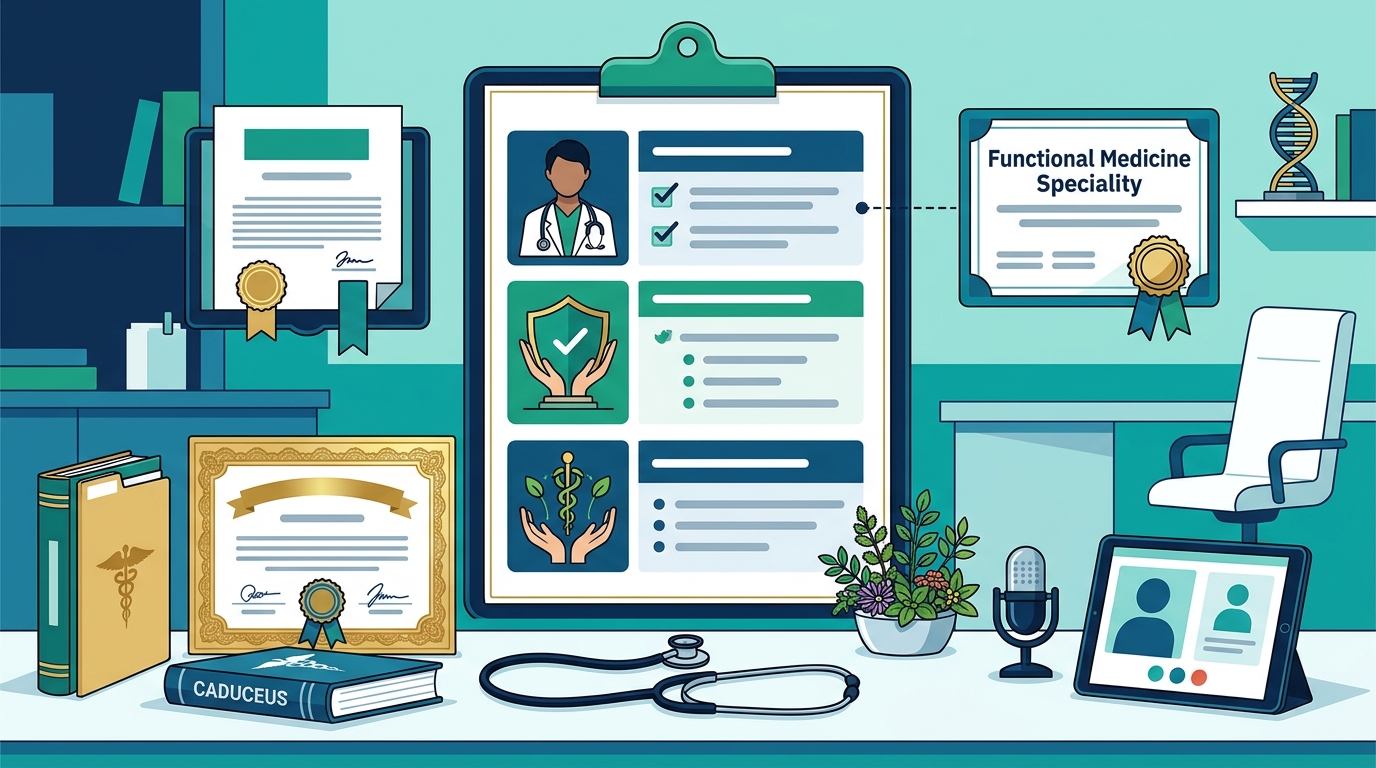
Board certification is the baseline standard for any medical provider. Functional medicine is a specialty approach, not a standalone board-certified specialty in all jurisdictions. Therefore, you must verify that the doctor holds a primary board certification, such as in Preventive Medicine, Family Medicine, or Internal Medicine. Dr. Kim is board-certified in Preventive Medicine, which provides the foundational rigor for risk framing and testing strategy. For additional details, review the Frequently Asked Questions.
Confirm a Consultative Scope of Practice
Functional medicine is a consultative practice, not a replacement for primary care or oncology. A safe online provider will explicitly state that they work alongside your existing medical team. They should not claim to manage your entire care continuum or replace your oncologist. Direct Integrative Care operates as a consultative integrative and functional medicine practice. Members are expected to maintain an established relationship with a primary care clinician who handles acute illness, preventive screening, and overall care coordination. For additional details, review the About.
This distinction is critical for safety. If a provider suggests you can stop seeing your oncologist or primary care physician, that is a major red flag. The integrative doctor should focus on root-cause support, such as nutrition, stress management, and symptom mitigation, while your oncology team manages the primary cancer treatment. Clear communication about this division of labor is a hallmark of a responsible telemedicine practice.
Evaluate Telemedicine Logistics and Licensing
Assess Clinical Focus and Condition Expertise
Key Takeaways
- Verify primary board certification and specific integrative fellowships like Osher/Weil or IFM Scholar.
- Ensure the provider operates in a consultative capacity, working alongside your oncology team.
- Confirm the doctor holds an active medical license in your state of residence.
- Understand that telemedicine-only practices do not perform physical exams or procedures.
- Look for transparency in membership terms, including what is and is not covered.
Frequently Asked Questions
Does functional medicine replace cancer treatment?
What is the difference between a functional medicine doctor and an oncologist?
An oncologist specializes in diagnosing and treating cancer. A functional medicine doctor focuses on root-cause analysis and integrative support. They often work together, with the oncologist managing the cancer and the functional medicine doctor addressing lifestyle, nutrition, and systemic health factors.
Can I see a functional medicine doctor online if I live in a different state?
Only if the doctor holds an active medical license in your state. Direct Integrative Care serves clients in Texas, Iowa, Illinois, Missouri, Georgia, and Florida. If you live outside these states, educational consultations may be available, but a treating relationship is not.
What is a membership-based telemedicine practice?
A membership-based practice operates on a direct agreement between the patient and the provider. It is not health insurance. Members pay a monthly fee for access to physician consultation services. This model removes coding pressure and allows clinical decisions to follow the patient's actual needs.
Does Direct Integrative Care provide emergency care?
No. This practice does not provide emergency or urgent care. If you are experiencing a medical emergency, call 911 or go to your nearest emergency department. Membership services are provided by secure video or telephone consultation only.