
Common Pitfalls in Transitioning to Concierge Functional Medicine and How to Avoid Them
The healthcare landscape is shifting rapidly toward personalized, patient-centered care models. According to a 2024 industry report on the growth of concierge medicine, the market is projected to expand significantly as patients seek deeper provider relationships and longer consultation times. This transition is not merely a business decision but a fundamental change in how care is delivered and valued. For practitioners, moving from traditional fee-for-service to a direct primary care model offers unparalleled opportunities for clinical autonomy and financial stability. However, the path is fraught with operational, financial, and cultural hurdles that can derail even the most well-intentioned practices. (Functional Medicine Integrative Functional)
Understanding the Concierge Functional Medicine Model
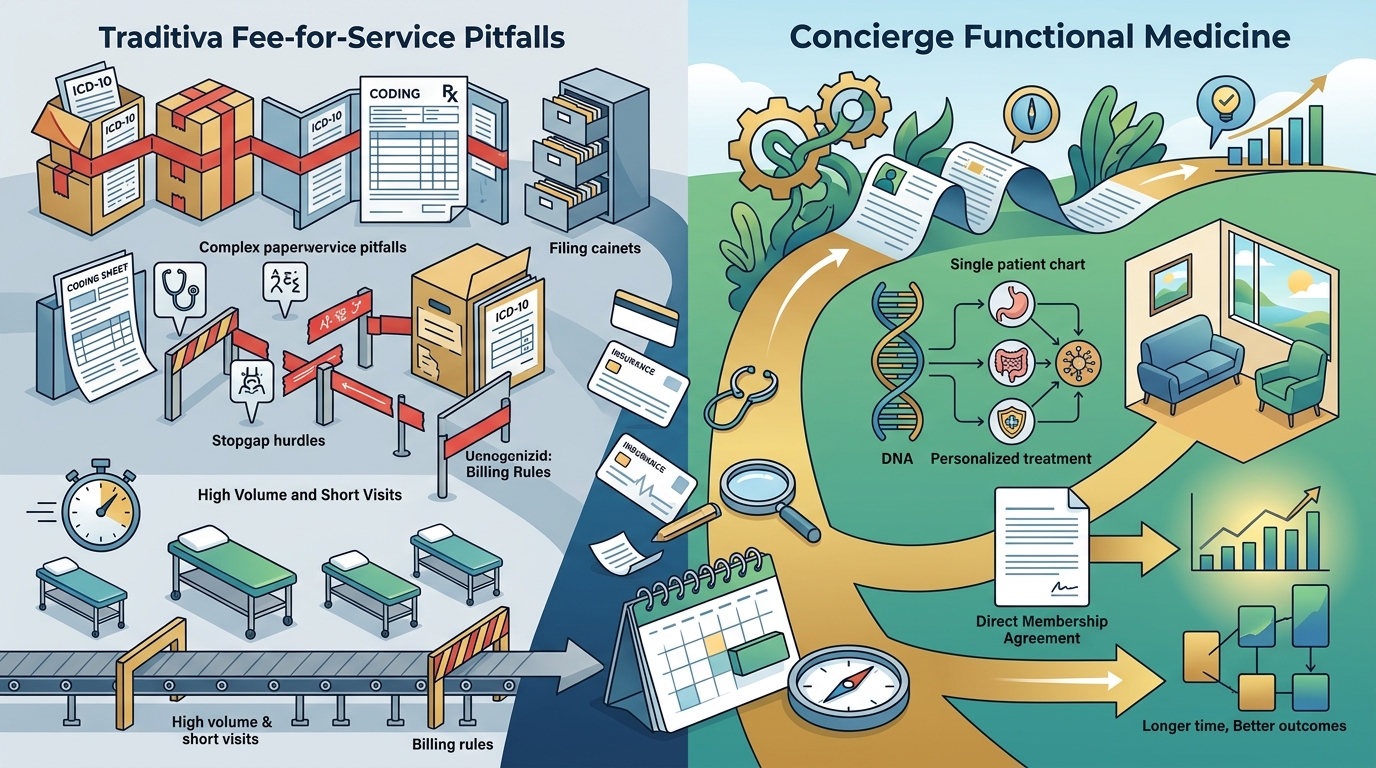
Functional medicine is a systems biology-based approach that focuses on identifying and addressing the root cause of disease. Unlike conventional medicine, which often treats symptoms in isolation, functional medicine views the body as an interconnected network. This distinction is critical for practitioners considering a transition. The concierge model, also known as direct primary care, removes the insurance intermediary, allowing for longer visits and more comprehensive care plans.
Dr. Kim at Direct Integrative Care exemplifies this approach by combining integrative functional medicine with personalized virtual assessments. This model allows patients to access high-quality care regardless of their physical location, expanding the practice's reach beyond local geographic boundaries. Understanding this synergy is the first step in avoiding the common pitfall of treating concierge medicine as a simple subscription service rather than a holistic health partnership.
Financial Pitfalls in the Transition
One of the most significant risks in transitioning to a concierge model is underestimating the financial runway required. Many practitioners fail to account for the initial drop in patient volume as they move away from insurance-based reimbursements. Data shows that practices often experience a 30 to 50 percent decline in patient numbers during the first six months of transition. This decline is due to the friction of patients adjusting to out-of-pocket payments and the time required to build a new membership base.
To avoid this financial cliff, practitioners must develop a robust financial plan that includes a minimum of six months of operating expenses. It is essential to price memberships not just based on current revenue but on the value of the services provided. For instance, a membership that includes unlimited access, advanced lab work, and personalized care plans should reflect the comprehensive nature of the service. Refer to our Virtual Assessment Form to understand how we structure our intake process to ensure financial and clinical alignment from day one.
Operational Challenges and Workflow
Transitioning to a concierge model requires a complete overhaul of operational workflows. Traditional practices are built around high patient volume and quick turnover. Concierge practices thrive on depth, continuity, and proactive management. A common pitfall is attempting to maintain old workflows, such as rigid appointment slots and reactive care models. This leads to provider burnout and patient dissatisfaction.
Successful practices implement flexible scheduling and asynchronous communication tools. This allows patients to reach their providers via secure messaging or phone calls without the need for a formal office visit. For example, Direct Integrative Care utilizes a streamlined web disclosure process to ensure all patients are fully informed about the scope of care and financial responsibilities before engaging in services. This transparency reduces administrative friction and sets clear expectations.
Staffing and Role Redefinition
Staff roles must also evolve. Medical assistants and nurses become crucial in care coordination, lab follow-up, and patient education. Investing in staff training for functional medicine principles ensures that the entire team can support the provider’s vision. Without this alignment, the practice risks becoming a bottleneck rather than a hub of health optimization.
Patient Communication and Expectations
Clear communication is the cornerstone of a successful transition. Patients accustomed to insurance-covered care may resist paying monthly or annual fees. The pitfall here is failing to articulate the value proposition effectively. Providers must clearly explain what the membership includes, such as extended visit times, access to advanced testing, and personalized health coaching.
According to a 2025 analysis of patient retention in direct primary care, practices that offer transparent pricing and clear service boundaries see a 40 percent higher retention rate in the first year. It is vital to address common concerns, such as what happens if a patient needs specialist care or hospitalization. Clarifying that concierge medicine complements, rather than replaces, traditional healthcare is essential for building trust.
Building Trust Through Education
Educating patients about the benefits of functional medicine helps justify the cost. Sharing success stories and explaining the science behind root-cause analysis can shift patient perception from cost to investment. Regular newsletters and blog posts, like the one you are reading now, serve as valuable tools for maintaining engagement and demonstrating expertise.
Integrating Functional Labs and Protocols
Functional medicine relies heavily on advanced diagnostic testing to uncover underlying imbalances. A common pitfall is ordering too many tests without a clear clinical hypothesis, leading to data overload and confusion. Alternatively, ordering too few tests may miss critical insights. The key is to use a targeted approach, guided by patient history and symptoms.
Direct Integrative Care emphasizes a personalized approach to lab work, ensuring that each test is relevant to the individual’s health goals. This method not only improves diagnostic accuracy but also manages costs for the patient. By focusing on high-yield tests, practitioners can provide actionable insights without overwhelming the patient with unnecessary expenses.
Interpreting Results in Context
Interpreting functional lab results requires specialized knowledge. Reference ranges often differ from conventional standards, and results must be viewed in the context of optimal health rather than just disease absence. Providers must be skilled in translating complex data into understandable action plans for their patients. This skill is a significant differentiator in the concierge model and a key factor in patient outcomes.
Technology Infrastructure and Compliance
Technology plays a pivotal role in the concierge model. Secure patient portals, electronic health records (EHR) compatible with functional medicine, and telehealth platforms are essential. A common pitfall is investing in technology that is not user-friendly for either the provider or the patient. This leads to low adoption rates and increased administrative burden.
Compliance with HIPAA and other data privacy regulations is non-negotiable. Ensuring that all communication channels, from email to video consultations, are secure protects both the patient and the practice. Direct Integrative Care maintains strict adherence to these standards, as outlined in our web disclosures, to guarantee patient safety and trust.
Telehealth Expansion
The rise of telehealth has expanded the reach of concierge practices beyond local limits. However, licensing across state lines can be a complex hurdle. Practitioners must navigate the legal requirements of practicing in multiple jurisdictions. Planning for this expansion early in the transition process can prevent future legal and operational issues.
Key Takeaways
- Financial Planning: Prepare for a 30-50 percent initial drop in patient volume and secure a six-month operating reserve.
- Value Proposition: Clearly articulate the benefits of concierge care, including extended visits and personalized attention.
- Operational Flexibility: Implement asynchronous communication and flexible scheduling to reduce provider burnout.
- Targeted Testing: Use advanced labs strategically to uncover root causes without causing data overload.
- Technology Integration: Invest in user-friendly, HIPAA-compliant telehealth and EHR systems.
- Patient Education: Continuously educate patients on the functional medicine approach to build trust and justify costs.
- Regulatory Compliance: Stay updated on licensing requirements for telehealth across different jurisdictions.
Frequently Asked Questions
What is the primary difference between functional medicine and conventional medicine?
Functional medicine is a systems biology-based approach that focuses on identifying and addressing the root cause of disease, whereas conventional medicine often treats symptoms in isolation. This distinction allows for more personalized and comprehensive care plans.
How long does it typically take to transition to a concierge model?
The transition process can take anywhere from six months to two years, depending on the size of the practice and the complexity of the operational changes. Financial planning and patient communication are critical during this period.
Do I need to stop accepting insurance entirely?
Not necessarily. Some concierge practices accept insurance for specific services or lab work, while others operate on a pure membership model. The choice depends on your business strategy and patient demographics.
How do I price my concierge membership?
Pricing should reflect the value of the services provided, including extended visits, advanced testing, and personalized care. It is essential to conduct a market analysis to ensure your pricing is competitive yet sustainable.
What role does telehealth play in concierge medicine?
Telehealth expands the reach of your practice, allowing you to serve patients beyond your local area. It also provides convenience for patients, enabling them to connect with their provider from anywhere.
How can I manage the increased administrative burden?
Investing in efficient technology, such as automated billing and secure messaging platforms, can help streamline administrative tasks. Additionally, hiring dedicated staff for care coordination can alleviate pressure on the provider.
What are the common pitfalls in patient communication?
Common pitfalls include failing to clearly explain the value of the membership, not addressing concerns about cost, and not setting clear boundaries for communication. Transparency and education are key to overcoming these challenges.
Is functional medicine covered by insurance?
Generally, functional medicine services and advanced lab work are not covered by traditional insurance. However, some labs may offer reimbursement options, and patients can often use HSA or FSA funds for these expenses.
Start Your Transition Today
Transitioning to a concierge functional medicine model is a significant step toward providing deeper, more meaningful care. By avoiding common pitfalls in financial planning, operational workflow, and patient communication, you can build a sustainable and thriving practice. If you are ready to explore how functional medicine can transform your health journey, consider scheduling a virtual assessment with Dr. Kim at Direct Integrative Care. Our team is dedicated to guiding you through every step of this transformative process, ensuring you receive the personalized, root-cause care you deserve.