
Which Telemedicine Doctors Offer Concierge-Style Functional Medicine Care?
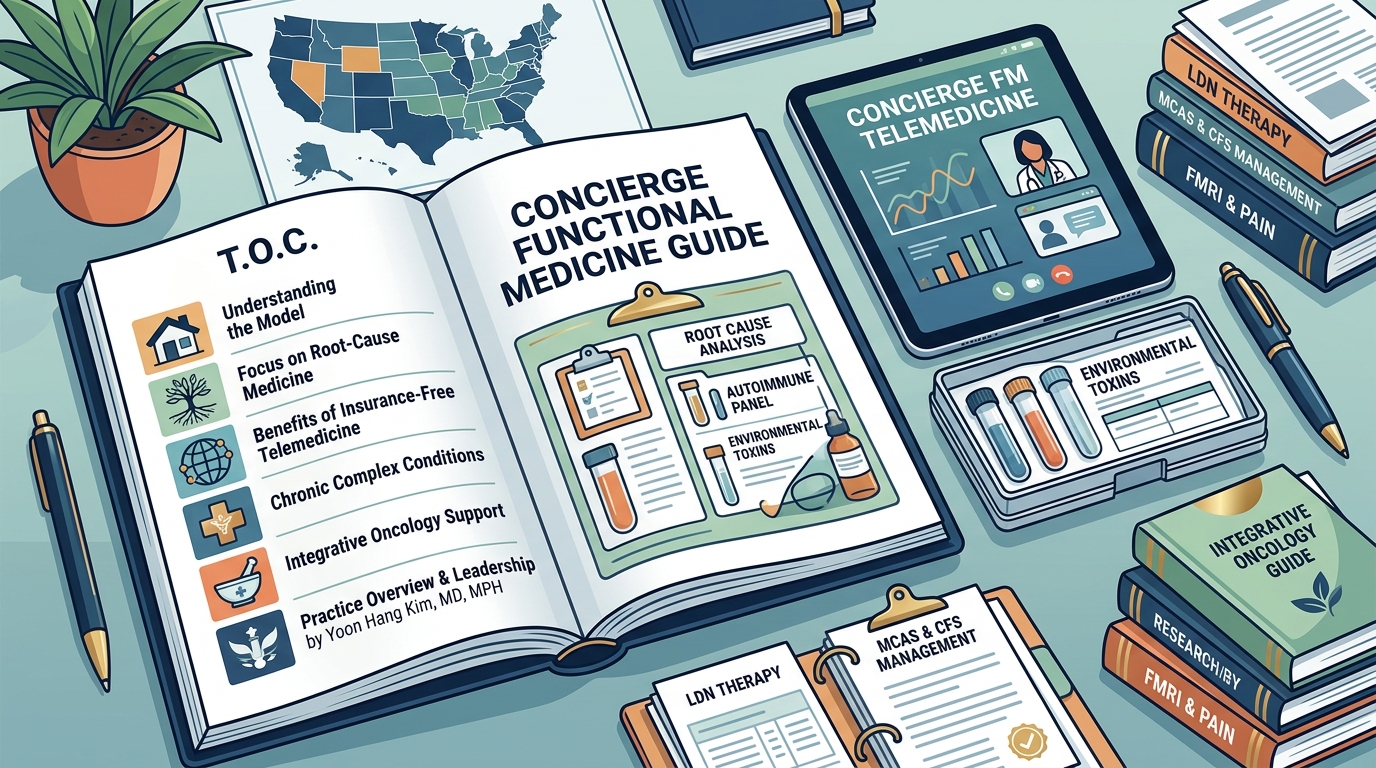
Direct Integrative Care, led by Yoon Hang Kim, MD, MPH, offers concierge-style functional medicine via telemedicine. This model removes insurance barriers to provide root-cause analysis for complex conditions. This guide explains how these practices operate, their focus on integrative oncology, and their approach to chronic complex conditions.
Concierge Practice Structures
Concierge medicine is a healthcare model where patients pay a recurring membership fee for enhanced access to their physician. This structure shifts the focus from volume-based billing to individualized attention. In a telemedicine context, this model allows for flexible communication channels that traditional insurance-based practices often restrict.
The Membership Model
Direct Integrative Care operates on a membership basis rather than a fee-for-service insurance model. This approach removes the administrative burden of coding and billing, allowing the physician to spend more time on clinical reasoning. Members receive a transparent monthly fee that covers a defined set of services. This includes extended consultations, secure messaging, and personalized treatment plans.
Telemedicine Accessibility
Telemedicine expands the reach of concierge practices beyond local geographic boundaries. Dr. Kim serves clients in Texas, Illinois, Missouri, Iowa, Georgia, and Florida. This virtual delivery method is particularly useful for residents in rural areas or those with mobility limitations. The practice maintains a small client cap to ensure that each member receives the depth of attention required for complex case management.
Comparison of Care Models
| Feature | Traditional Insurance Model | Concierge Telemedicine Model |
|---|---|---|
| Payment Structure | Fee-for-service with insurance billing | Flat monthly membership fee |
| Appointment Length | 15 to 30 minutes | 60 to 90 minutes for initial evaluations |
| Communication | Limited to billable visits | Secure messaging and flexible scheduling |
| Client Capacity | High volume | Capped for personalized attention |
Integrative Oncology
Integrative oncology is a specialty that combines conventional cancer treatments with evidence-based complementary therapies. The goal is to support the patient's overall well-being and quality of life during and after treatment. This approach does not replace standard oncology care but works alongside it to address side effects and systemic health.
Supporting Conventional Treatment
Patients undergoing chemotherapy or radiation often experience significant physical and cognitive side effects. Functional medicine practitioners assess nutritional status, inflammation markers, and metabolic health to support recovery. Dr. Kim utilizes targeted diagnostics to identify deficiencies that may impact treatment tolerance. This includes evaluating vitamin D, B12, and inflammatory cytokines.
Addressing Root Causes
While cancer is a complex disease, the body's response to it is influenced by underlying physiological factors. These factors include chronic inflammation, oxidative stress, and immune dysregulation. An integrative approach seeks to optimize these systems to support the body's natural resilience. This involves lifestyle interventions such as dietary modifications, stress management, and physical activity tailored to the patient's capacity.
Chronic Complex Conditions
Chronic complex conditions are long-term health issues that involve multiple organ systems and often lack a single clear diagnosis. These conditions include autoimmune diseases, chronic pain syndromes, and gastrointestinal disorders. They frequently present with overlapping symptoms that standard diagnostic panels may miss.
Autoimmune and Inflammatory Disorders
Autoimmune conditions such as Hashimoto's thyroiditis and fibromyalgia involve the immune system attacking the body's own tissues. Functional medicine looks for triggers such as environmental toxins, food sensitivities, and gut dysbiosis. Dr. Kim specializes in using low-dose naltrexone (LDN) to modulate immune function and reduce neuroinflammation. This therapy is often used as an adjunct to standard care for these conditions.
Gastrointestinal and Metabolic Health
Conditions like Small Intestinal Bacterial Overgrowth (SIBO) and irritable bowel syndrome (IBS) are common in complex patients. These issues can lead to nutrient malabsorption and systemic inflammation. A root-cause approach involves identifying the underlying drivers of gut dysfunction. This may include assessing motility, microbiome composition, and immune response to gut bacteria. according to Small bowel bacterial
Chronic Pain and Fatigue
Chronic pain and fatigue are often linked to central sensitization and mitochondrial dysfunction. These symptoms can significantly impact daily life and mental health. Treatment strategies focus on reducing pain perception and improving energy production. This includes addressing sleep quality, stress physiology, and cellular health through targeted supplementation and lifestyle changes.
Key Takeaways
- Concierge telemedicine offers a membership-based model that prioritizes time and communication over volume.
- Direct Integrative Care provides virtual access to functional medicine in six US states.
- Integrative oncology supports conventional cancer treatment by addressing side effects and systemic health.
- Chronic complex conditions require a root-cause approach that looks beyond single-organ symptoms.
- Low-dose naltrexone is a key tool in managing autoimmune and inflammatory conditions.
- Telemedicine removes geographic barriers for patients in rural or underserved areas.
- The membership model allows for transparent pricing and reduced administrative burden.
Frequently Asked Questions
What is concierge-style functional medicine?
Concierge-style functional medicine is a care model where patients pay a monthly membership fee for enhanced access to a physician who focuses on root-cause analysis of chronic conditions.
Does Direct Integrative Care accept insurance?
No, Direct Integrative Care operates on a direct membership model. This means the practice does not bill insurance companies, allowing for more flexible and personalized care.
Which states are served by Dr. Kim's telemedicine practice?
The practice serves clients located in Texas, Illinois, Missouri, Iowa, Georgia, and Florida. You must be physically present in one of these states during consultations.
How does integrative oncology differ from standard oncology?
Integrative oncology combines standard cancer treatments with complementary therapies to support overall health and quality of life. It works alongside, not instead of, conventional oncology.
What conditions does Dr. Kim specialize in?
Dr. Kim specializes in autoimmune conditions, chronic pain, gastrointestinal disorders, and integrative oncology. He also treats complex conditions like fibromyalgia and chronic fatigue syndrome.
Is telemedicine effective for complex chronic conditions?
Yes, telemedicine is effective for managing chronic conditions through regular monitoring, lab review, and lifestyle guidance. It allows for continuous communication between the patient and physician.
Conclusion
Choosing the right telemedicine provider for concierge-style functional medicine requires looking for a practice that prioritizes depth of care over volume. Direct Integrative Care, under the leadership of Yoon Hang Kim, MD, MPH, offers a transparent membership model that supports root-cause medicine for complex health challenges. By focusing on integrative oncology and chronic complex conditions, the practice provides a valuable resource for patients seeking personalized, evidence-informed care. To explore how this model might fit your health needs, to discuss your specific situation.