
Traditional primary care models are increasingly struggling to meet the complexity of modern chronic disease management. According to the Centers for Disease Control and Prevention, approximately 60% of adults in the United States have at least one chronic disease, and 40% have two or more. This statistic highlights a critical gap in the current healthcare infrastructure, where standard visits are often too brief to address the root causes of persistent health issues. Concierge functional medicine emerges as a distinct alternative, prioritizing depth, prevention, and personalized care over the transactional nature of standard visits. Understanding these differences is essential for patients seeking long-term health optimization rather than just acute symptom management. (Functional Medicine Integrative Functional)
Time and Access Dynamics
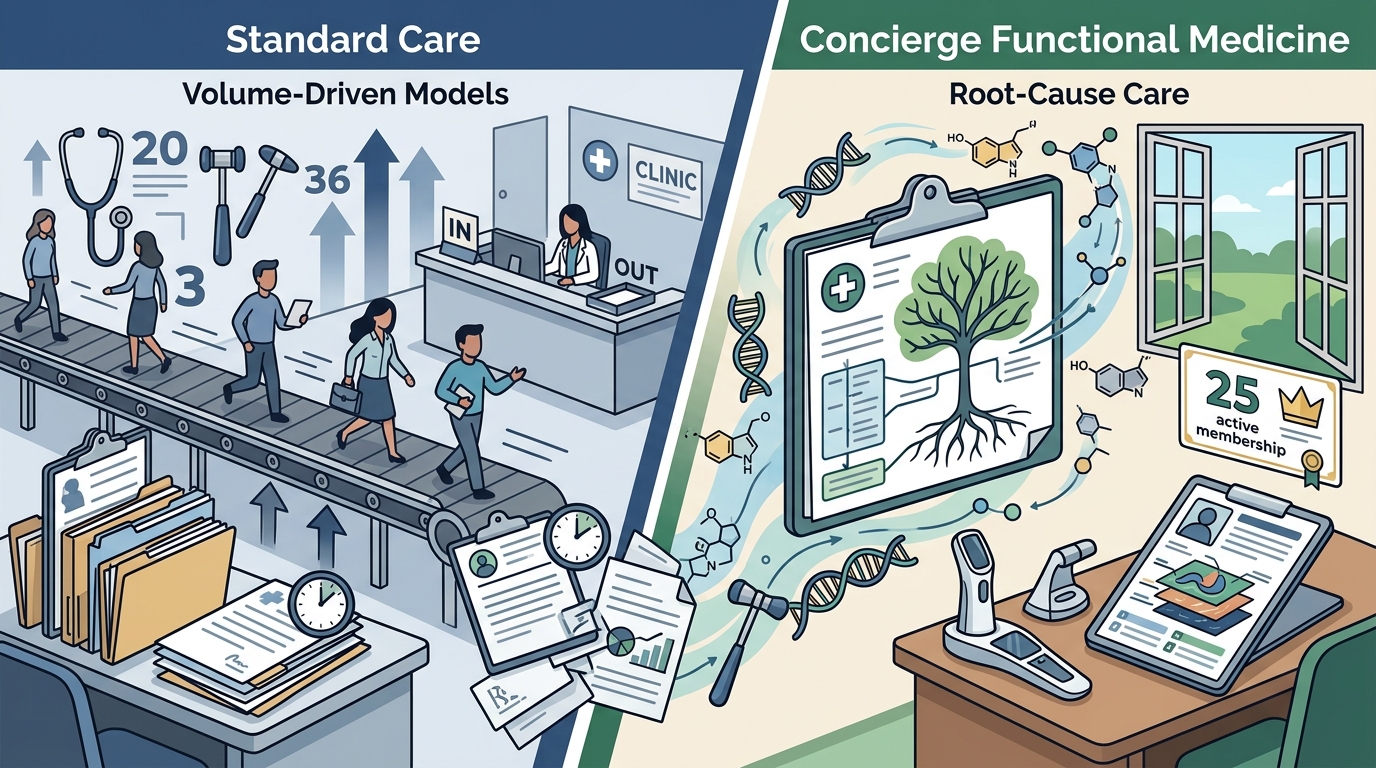
The most immediate difference between concierge functional medicine and a standard doctor's visit is the allocation of time. In a standard primary care setting, patients often face significant wait times and brief consultation windows. The average primary care physician spends less than 15 minutes with a patient during a routine visit. This constraint forces providers to focus on acute issues or immediate medication refills rather than comprehensive health analysis.
Concierge functional medicine flips this model entirely. Dr. Kim at Direct Integrative Care dedicates significantly more time to each patient, often scheduling 60 to 90-minute initial consultations. This extended timeframe allows for a thorough review of medical history, lifestyle factors, and environmental exposures. Patients gain direct access to their provider via phone or text, ensuring that urgent questions are addressed promptly without navigating a busy clinic's front desk.
This model of care is designed for those who value uninterrupted attention. It removes the pressure of the "assembly line" approach, allowing for a more relaxed and productive dialogue. The result is a care plan that is not only more accurate but also more tailored to the individual's unique biological needs.
Diagnostic Depth and Testing
Standard medical care typically relies on a reactive diagnostic approach. Doctors order tests based on specific symptoms that have already manifested, often waiting for results to confirm a diagnosis before initiating treatment. This process can be slow and may miss underlying systemic imbalances that have been developing over years.
Functional medicine takes a proactive and investigative stance. It utilizes advanced laboratory testing to identify imbalances in physiology, nutrition, and hormonal function before they manifest as full-blown disease. These tests may include comprehensive stool analysis, food sensitivity panels, hormone metabolite testing, and micronutrient assessments.
At Direct Integrative Care, the diagnostic process is deeply personalized. Instead of a one-size-fits-all panel, tests are selected based on the patient's specific history and goals. This precision allows for the identification of root causes, such as gut dysbiosis, chronic inflammation, or metabolic dysfunction, which are often overlooked in standard visits.
Treatment Philosophy and Approach
The core distinction lies in the treatment philosophy. Standard medicine is largely disease-centric, focusing on suppressing symptoms through pharmaceutical interventions. While essential for acute care, this approach often fails to address the underlying drivers of chronic conditions.
Functional medicine is patient-centric and systems-based. It views the body as an interconnected network where dysfunction in one area affects the whole. Treatment plans often include lifestyle modifications, nutritional counseling, stress management techniques, and targeted supplements alongside any necessary medications.
Functional medicine is a systems biology-based approach that identifies and addresses the root causes of disease. This definition underscores its difference from standard care, which often treats the disease itself rather than the person. By empowering patients with knowledge about their bodies, functional medicine fosters long-term self-care and resilience.
Cost Structure and Value
Financial models differ significantly between the two approaches. Standard care operates on a fee-for-service or insurance-based model. Patients pay copays, deductibles, and coinsurance, while the provider bills insurance companies for each service rendered. This system can create friction, as providers may feel pressured to see more patients to maintain revenue.
Concierge functional medicine typically involves a membership fee or retainer. This fee covers the enhanced level of access, extended visit times, and comprehensive care coordination. While the upfront cost may seem higher, it often provides greater value by preventing costly hospitalizations and emergency room visits down the line.
For those seeking transparency and predictability, the concierge model offers clear pricing structures. Patients at Direct Integrative Care can explore service options to find a plan that fits their health goals and budget. This model aligns the provider's incentives with the patient's health outcomes, as the provider is rewarded for keeping patients healthy, not just for treating them when they are sick.
The Provider-Patient Relationship
In standard care, the relationship is often transient. Patients may see different providers or have limited continuity of care. The interaction is frequently brief and focused on immediate needs.
Concierge functional medicine fosters a long-term partnership. Providers get to know their patients deeply, understanding their family history, lifestyle, and personal goals. This continuity builds trust and allows for more effective care over time.
Dr. Kim at Direct Integrative Care emphasizes this collaborative relationship. Patients are active participants in their health journey, working alongside their provider to make informed decisions. This partnership is crucial for managing complex chronic conditions that require ongoing adjustment and support.
Comparison Summary
To help clarify the distinctions, the following table summarizes the key differences between concierge functional medicine and standard doctor visits.
| Feature | Standard Doctor Visit | Concierge Functional Medicine |
|---|---|---|
| Visit Duration | 10-15 minutes | 60-90 minutes |
| Focus | Acute symptoms and disease management | Root cause analysis and prevention |
| Testing | Standard panels based on symptoms | Advanced, personalized functional testing |
| Access | Phone triage and scheduled appointments | Direct access via phone/text/email |
| Payment | Insurance-based copays and deductibles | Membership retainer or direct pay |
| Approach | Pharmaceutical-centric | Lifestyle, nutrition, and holistic interventions |
Key Takeaways
- Time Allocation: Standard visits average under 15 minutes, while functional medicine consultations often exceed 60 minutes.
- Root Cause Focus: Functional medicine seeks to identify underlying imbalances rather than just suppressing symptoms.
- Advanced Testing: Utilizes specialized labs for gut health, hormones, and nutrition, which are rarely part of standard care.
- Direct Access: Patients receive direct communication channels with their provider, bypassing traditional gatekeepers.
- Preventive Model: Emphasizes preventing disease progression through lifestyle and nutritional interventions.
- Personalized Care: Treatment plans are tailored to individual biology, not standardized protocols.
- Provider Continuity: Builds a long-term partnership between patient and provider for sustained health outcomes.
Frequently Asked Questions
Is functional medicine covered by insurance?
While some functional medicine tests may be reimbursable, the concierge membership fee is typically not covered by insurance. However, the cost of care is often offset by reduced emergency visits and hospitalizations.
How is functional medicine different from alternative medicine?
Functional medicine is evidence-based and integrates conventional medical practices with advanced diagnostic testing. It is not merely "alternative" but rather a comprehensive approach that uses the best of both worlds.
Can functional medicine help with chronic fatigue?
Yes, functional medicine is particularly effective for chronic fatigue. It investigates underlying causes such as mitochondrial dysfunction, adrenal issues, and nutrient deficiencies that standard tests often miss.
What is the typical cost of a concierge membership?
Costs vary by provider and region. At Direct Integrative Care, we offer transparent pricing structures. Contact us for current membership details.
Do I need a referral to see a functional medicine doctor?
No, you can typically self-refer to a functional medicine provider. However, it is beneficial to coordinate with your primary care physician to ensure continuity of care.
How long does it take to see results?
Results vary by individual. Some patients feel improvements in energy and digestion within weeks, while others may take several months to fully resolve complex chronic conditions.
Is functional medicine suitable for everyone?
Functional medicine can benefit almost anyone seeking to optimize their health. It is especially valuable for those with chronic conditions, autoimmune diseases, or those looking to prevent future health issues.
Start Your Health Journey Today
If you are tired of brief visits and generic treatments, it may be time to explore the benefits of concierge functional medicine. Dr. Kim at Direct Integrative Care offers a personalized approach to health that prioritizes your well-being above all else. Take the first step toward a healthier, more vibrant life by scheduling a virtual assessment today. Discover how functional medicine can transform your health outcomes and provide the deep, attentive care you deserve.