
What Sets Functional Medicine Apart From Conventional Care
Modern healthcare is undergoing a significant paradigm shift. According to the Institute of Functional Medicine, functional medicine is a system-centered approach that focuses on identifying and addressing the root cause of disease rather than merely suppressing symptoms. This distinction is critical for patients seeking long-term wellness. While conventional medicine remains the gold standard for acute care and emergency intervention, functional medicine offers a personalized roadmap for chronic conditions. Understanding these differences helps patients make informed decisions about their health journey. (Functional Medicine Integrative Functional)
Root Cause Analysis vs Symptom Management
The most fundamental difference lies in how each system views illness. Conventional medicine is primarily reactive. It excels in acute care, trauma, and infectious diseases. When a patient presents with a broken bone or a bacterial infection, conventional protocols provide immediate, life-saving interventions. However, for chronic conditions like diabetes, autoimmune disorders, or fatigue, the reactive model often falls short. It typically focuses on managing symptoms through pharmaceuticals. This approach can leave the underlying drivers of disease unaddressed.
Functional medicine takes a proactive and systems biology-based perspective. It views the body as an interconnected network. A symptom in one area, such as digestive issues, may stem from hormonal imbalances or immune system dysfunction elsewhere. Functional medicine practitioners spend significant time exploring these connections. They ask why the disease developed in the first place. This investigation leads to targeted interventions that restore balance. For more information on this methodology, you can explore the Institute of Functional Medicine guidelines.
This distinction is vital for patients who feel stuck in a cycle of medication without relief. By shifting the focus from "what is the diagnosis" to "why did the diagnosis occur," functional medicine opens doors to sustainable healing. It empowers patients to become active participants in their recovery process.
The Patient-Centered Approach
Conventional medicine often operates on a disease-centered model. The primary goal is to classify the illness and apply a standardized treatment protocol. This efficiency is necessary in high-volume clinical settings. However, it can sometimes overlook the unique biological, environmental, and lifestyle factors that contribute to an individual's health. Two patients with the same diagnosis may receive identical prescriptions, regardless of their personal histories.
Functional medicine is inherently patient-centered. It recognizes that no two individuals are biologically identical. Genetic predispositions, past trauma, dietary habits, and environmental exposures all play a role in health outcomes. At Direct Integrative Care, we prioritize understanding the whole person. This includes their mental health, social connections, and personal goals. This holistic view allows for a more nuanced and effective care plan.
This approach fosters a stronger therapeutic alliance. Patients feel heard and understood. They are not just a chart number. This relationship is crucial for long-term behavior change and adherence to treatment plans. When patients understand the "why" behind their care, they are more motivated to engage in the necessary lifestyle modifications.
Diagnostic Tools and Testing
The tools used to diagnose and monitor health differ significantly between the two models. Conventional medicine relies heavily on standard laboratory ranges. These ranges are often based on the average population, not necessarily on optimal health. A result may fall within the "normal" range but still indicate suboptimal function for a specific individual. For example, a thyroid level might be technically normal but still cause significant symptoms in a sensitive patient.
Functional medicine utilizes advanced and specialized testing. This may include comprehensive stool analysis, food sensitivity panels, hormone metabolite testing, and micronutrient assessments. These tests provide a deeper look into physiological function. They can reveal imbalances long before they manifest as full-blown disease. This early detection is a key advantage of the functional approach.
According to research published in the National Center for Biotechnology Information, personalized medicine strategies can lead to better outcomes for chronic disease management. By tailoring tests to the individual's specific presentation, practitioners can identify unique triggers. This precision allows for more targeted and effective interventions. It moves care away from guesswork and toward evidence-based personalization.
Treatment Philosophy and Lifestyle
2Treatment in conventional medicine is often pharmacological. Medications are powerful tools for managing symptoms and preventing acute crises. However, they can sometimes introduce new side effects or mask underlying issues. The goal is often stabilization rather than cure. This is appropriate for many conditions but may not address the root cause of chronic illness.
Functional medicine emphasizes lifestyle as medicine. Nutrition, sleep, stress management, and movement are prescribed as primary therapeutic agents. Supplements and botanicals are used to support physiological processes. The goal is to remove barriers to health and provide the body with the resources it needs to heal itself. This approach is supported by growing evidence on the impact of lifestyle factors on chronic disease. A study in the Lancet Public Health journal highlights the significant role of lifestyle in preventing non-communicable diseases.
This does not mean rejecting conventional medicine entirely. The two models are complementary. Functional medicine integrates the best of both worlds. It uses conventional diagnostics when necessary but adds layers of depth and personalization. It seeks to reduce reliance on medications where possible by addressing lifestyle drivers. This holistic strategy promotes resilience and long-term vitality.
Comparison of Medical Models
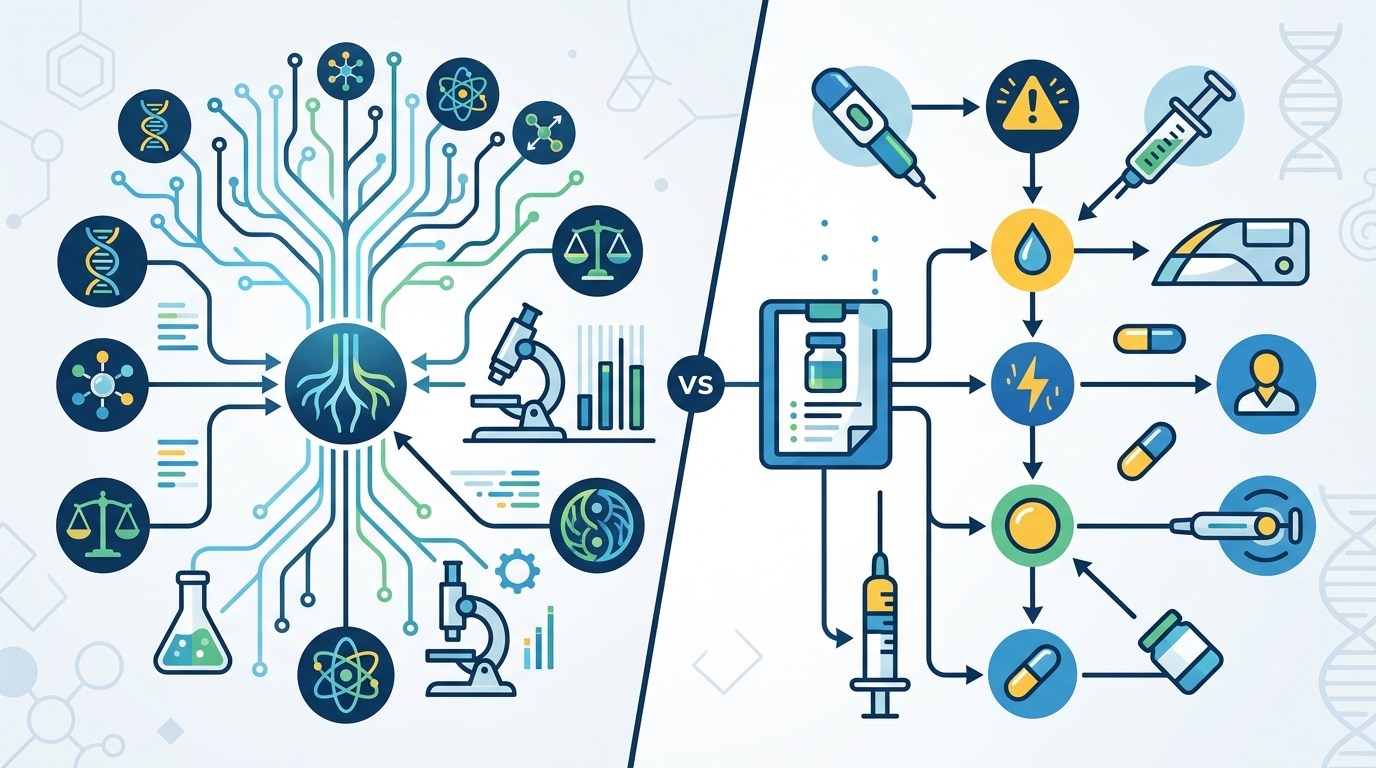
To help clarify the distinctions, here is a summary of the key differences between functional and conventional medicine.
| Feature | Conventional Medicine | Functional Medicine |
|---|---|---|
| Primary Focus | Disease-centered, symptom suppression | Patient-centered, root cause identification |
| Approach to Care | Reactive, acute care oriented | Proactive, preventive, and restorative |
| Diagnostic Tools | Standard lab ranges, imaging | Advanced, specialized, and personalized testing |
| Treatment Methods | Primarily pharmaceuticals and surgery | Lifestyle, nutrition, supplements, and targeted therapies |
| Doctor-Patient Time | Shorter visits, standardized protocols | Longer consultations, deep history taking |
| Goal | Stabilization and acute intervention | Optimal health and disease reversal |
Key Takeaways
- Functional medicine is a system-centered approach that identifies the root cause of disease.
- Conventional medicine excels in acute care but may struggle with chronic disease complexity.
- Functional medicine utilizes advanced testing to find imbalances before they become symptomatic.
- Lifestyle factors such as diet and sleep are central to functional treatment plans.
- The two models are complementary, not mutually exclusive.
- Personalized care leads to better engagement and long-term health outcomes.
- Direct Integrative Care offers virtual assessments to explore functional medicine options.
Frequently Asked Questions
Is functional medicine a replacement for conventional medicine?
No, functional medicine is not a replacement. It is a complementary approach. It works alongside conventional medicine to provide a more comprehensive view of health. For acute emergencies, conventional care remains essential. For chronic conditions, functional medicine offers additional tools and insights.
How long does a functional medicine consultation take?
Initial consultations are typically longer than standard appointments. They often last between 60 to 90 minutes. This allows the practitioner to take a detailed health history and understand the patient's full context. Follow-up visits may be shorter but still focus on deep engagement.
Does functional medicine cover insurance?
Insurance coverage varies by provider and plan. Some tests and services may be covered, while others are often out-of-pocket. It is important to check with your insurance provider. Direct Integrative Care can provide documentation to help with reimbursement processes where applicable.
What types of conditions does functional medicine treat?
Functional medicine is particularly effective for chronic conditions such as autoimmune diseases, digestive disorders, hormonal imbalances, and chronic fatigue. It can also support general wellness and prevention strategies for anyone seeking to optimize their health.
Can I see a functional medicine doctor virtually?
Yes, many functional medicine practitioners offer virtual consultations. This increases accessibility for patients who may not live near a specialist. Virtual assessments allow for thorough history taking and personalized care planning from anywhere.
How is functional medicine different from naturopathy?
While both emphasize natural healing, functional medicine is grounded in systems biology and rigorous scientific research. It integrates conventional medical knowledge with advanced diagnostic tools. Naturopathy may focus more on traditional herbal and physical therapies. Functional medicine is often practiced by MDs, DOs, and other licensed clinicians.
What should I expect in my first visit?
You can expect a deep dive into your health history. The practitioner will ask about your diet, sleep, stress, and past medical events. They will likely order specialized tests to gather data. This information forms the basis of your personalized health roadmap.
Schedule Your Virtual Assessment
Ready to explore a more personalized approach to your health? Functional medicine offers a path to understanding the root causes of your symptoms. At Direct Integrative Care, we provide expert guidance tailored to your unique needs. Take the first step toward optimal wellness today. Click here to schedule your virtual assessment and begin your journey to lasting health.