

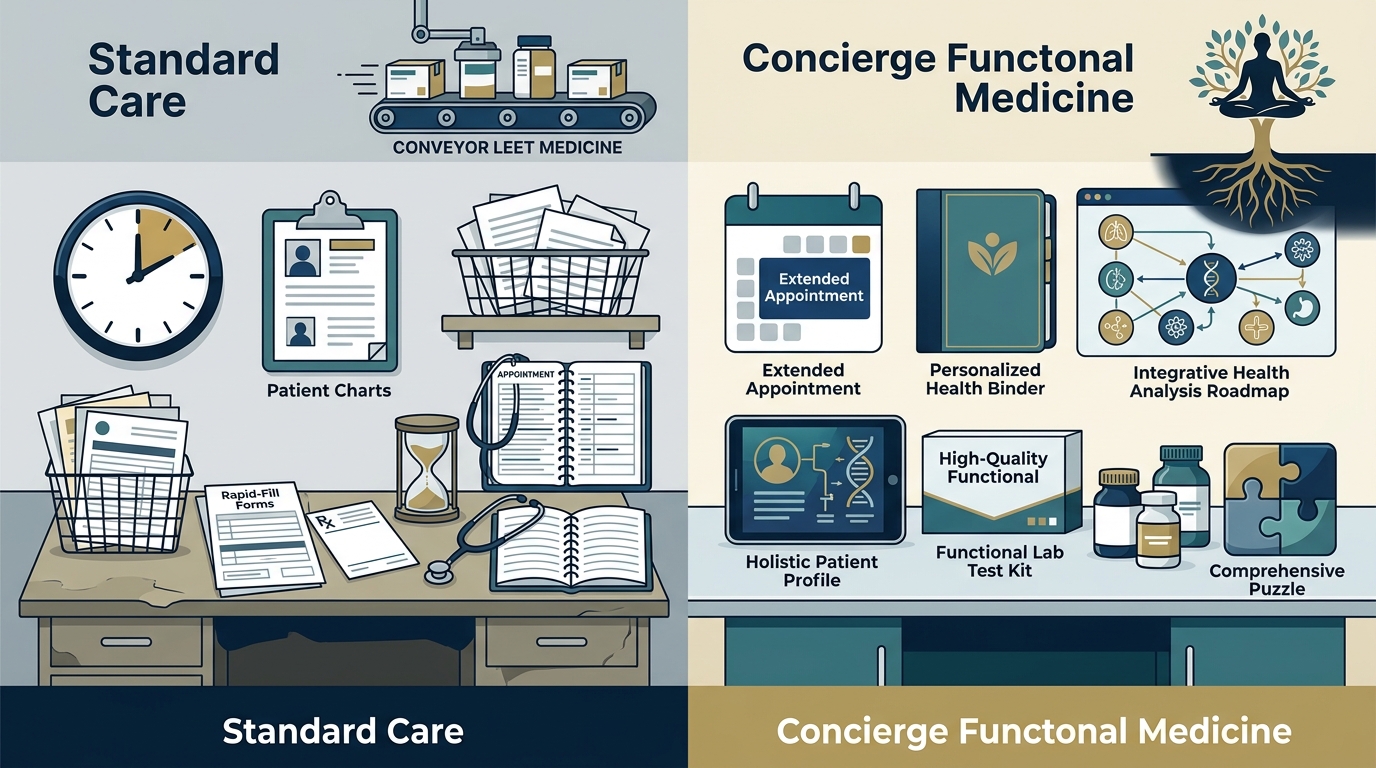
Traditional healthcare systems are often criticized for their rushed appointment structures, where patients receive an average of only twelve minutes per visit. This time constraint frequently leads to fragmented care and missed diagnostic opportunities. In contrast, concierge functional medicine prioritizes deep, longitudinal relationships between providers and patients. According to the American College of Physicians, the shift toward value-based care models aims to address these inefficiencies by focusing on preventive health and comprehensive diagnostics. This article explores how this specialized approach differs from standard medical visits, particularly through the lens of integrative practices like those offered by Direct Integrative Care. (Functional Medicine Integrative Functional)
Defining Functional Medicine
To understand the difference, one must first define the core methodology. Functional medicine is a systems biology-based approach that focuses on identifying and addressing the root cause of disease. Unlike conventional medicine, which often treats symptoms in isolation, functional medicine views the body as an interconnected network. This definition highlights the shift from reactive treatment to proactive health optimization.
Integrative functional medicine combines this rigorous scientific framework with conventional medical practices. Dr. Kim at Direct Integrative Care utilizes this dual approach to treat complex chronic conditions. The goal is not merely to suppress symptoms but to restore physiological balance. This requires a provider who is willing to look beyond the standard checklist of symptoms.
Time Allocation and Patient Access
The most immediate difference between concierge functional medicine and a standard doctor's visit is the allocation of time. In a standard primary care setting, providers often manage a panel of several thousand patients. This volume necessitates brief, focused visits that prioritize acute issues and medication management. Patients rarely have the opportunity to discuss lifestyle factors, environmental triggers, or subtle physiological changes.
Concierge functional medicine operates on a different timeline. Initial consultations often last between sixty to ninety minutes. This extended duration allows for a comprehensive review of the patient's history, including genetic predispositions, past traumas, and daily habits. Subsequent follow-up visits are also significantly longer, typically ranging from forty-five to sixty minutes. This access ensures that providers can adjust treatment plans dynamically based on real-time patient feedback.
Furthermore, access to care is streamlined. Concierge models often provide direct communication channels, such as text or email, allowing patients to reach their providers between visits. This continuous support system reduces the anxiety associated with waiting for appointments and ensures that urgent concerns are addressed promptly. For those seeking virtual care, platforms like Direct Integrative Care offer seamless remote assessments that maintain this high level of accessibility.
Diagnostic Depth and Testing
Standard medical visits rely heavily on insurance-covered diagnostic tests. These tests are designed to identify specific diseases or abnormalities that fit within established clinical guidelines. While essential for acute care, these tests often miss subclinical imbalances that contribute to chronic illness. For example, standard blood panels may show "normal" ranges for vitamin D or thyroid function, even when the patient is experiencing significant fatigue or brain fog.
Functional medicine utilizes advanced, often specialized testing to uncover these hidden drivers. This may include comprehensive stool analysis, food sensitivity panels, hormone metabolite testing, and organic acids tests. These diagnostics provide a granular view of gut health, detoxification pathways, and metabolic function. The data allows providers to create highly personalized treatment protocols that address the specific biochemical needs of the individual.
This depth of investigation is possible because concierge practices are not bound by the restrictive reimbursement codes of traditional insurance. Providers can order tests that are clinically relevant but not yet widely covered by payers. This freedom enables a more thorough investigation into the root causes of complex conditions such as autoimmune disorders, hormonal imbalances, and chronic fatigue.
The Holistic Treatment Philosophy
Standard care often follows a linear model: diagnose a condition, prescribe a medication, and monitor for side effects. While this approach is effective for acute infections and emergencies, it can be insufficient for managing chronic, multifactorial diseases. The treatment is often siloed, with different specialists treating individual organs without considering their interconnectivity.
Functional medicine adopts a holistic philosophy that considers the whole person. Treatment plans typically include a combination of nutrition, lifestyle modifications, stress management, and targeted supplementation. Medications are used when necessary, but they are often viewed as one tool among many. The emphasis is on empowering patients to take an active role in their healing process.
This approach is particularly effective for conditions that are influenced by lifestyle factors. For instance, managing type 2 diabetes or hypertension may involve dietary changes, sleep optimization, and stress reduction techniques alongside medication. By addressing these foundational elements, patients can often reduce their reliance on pharmaceuticals and improve their overall quality of life. This comprehensive strategy aligns with the principles of integrative medicine, which seeks to blend the best of conventional and alternative therapies.
Cost Structure and Membership Models
The financial model of concierge functional medicine differs significantly from traditional healthcare. Standard visits are typically covered by insurance, but patients often face high deductibles, copays, and limited provider networks. The cost of advanced testing and specialized treatments may also be prohibitive or require extensive prior authorization.
Concierge practices often operate on a membership or retainer basis. Patients pay an annual or monthly fee that covers the enhanced level of service, including extended visits, direct access, and care coordination. This model aligns the provider's incentives with the patient's health outcomes rather than the volume of services rendered. While the upfront cost may seem higher, many patients find that the value provided through improved health and reduced need for emergency care justifies the investment.
Some concierge practices, like Direct Integrative Care, may offer virtual assessment options that make this model more accessible to a broader geographic audience. These virtual services can reduce overhead costs, potentially making the membership more affordable while maintaining the high standard of care. It is important to review the specific services included in the membership to ensure it meets your individual health needs.
Comparison Summary
The following table summarizes the key differences between concierge functional medicine and standard medical care.
| Feature | Standard Medical Care | Concierge Functional Medicine |
|---|---|---|
| Visit Duration | 10-15 minutes | 45-90 minutes |
| Focus | Symptom management and acute care | Root cause analysis and prevention |
| Testing | Standard insurance-covered panels | Advanced, specialized functional testing |
| Access | Phone triage and scheduled appointments | Direct communication and flexible scheduling |
| Treatment | Primarily pharmaceutical | Nutrition, lifestyle, and targeted supplements |
| Cost Model | Insurance-based with copays/deductibles | Membership or retainer fee |
Key Takeaways
- Concierge functional medicine offers significantly longer visit times, allowing for deeper patient-provider relationships.
- Diagnostic approaches in functional medicine are more comprehensive, utilizing advanced testing to identify subclinical imbalances.
- The treatment philosophy is holistic, focusing on nutrition, lifestyle, and root cause resolution rather than just symptom suppression.
- Direct Integrative Care provides virtual assessment options, making specialized functional medicine accessible to a wider audience.
- The cost structure is based on membership fees, which covers enhanced access and personalized care planning.
- Patients gain direct access to their providers via text or email, reducing wait times for urgent concerns.
- Integrative functional medicine combines conventional medical expertise with advanced diagnostic tools for optimal health outcomes.
Frequently Asked Questions
What is the primary difference between functional medicine and conventional medicine?
Functional medicine focuses on identifying and addressing the root causes of disease through a systems biology approach, whereas conventional medicine often prioritizes symptom management and acute care. This fundamental difference leads to more personalized and preventive treatment plans in functional medicine.
How long are typical appointments in concierge functional medicine?
Initial consultations in concierge functional medicine typically last between sixty to ninety minutes. Follow-up visits are also extended, usually ranging from forty-five to sixty minutes, allowing for thorough review and adjustment of treatment protocols.
Is functional medicine covered by insurance?
While some aspects of functional medicine may be covered by insurance, many advanced diagnostic tests and the concierge service model itself are often paid for through membership fees or out-of-pocket. It is advisable to check with your specific provider and insurance plan for coverage details.
Can I receive functional medicine care virtually?
Yes, many concierge functional medicine practices, including Direct Integrative Care, offer virtual assessments. This allows patients to receive comprehensive care and personalized treatment plans from the comfort of their homes, regardless of their geographic location.
What types of conditions does functional medicine treat?
Functional medicine is particularly effective for complex chronic conditions such as autoimmune disorders, hormonal imbalances, digestive issues, and chronic fatigue. It addresses the underlying physiological imbalances that contribute to these conditions.
How does the cost of concierge medicine compare to standard care?
Concierge medicine involves a membership or retainer fee, which may be higher than standard copays. However, it provides unlimited access to extended visits and direct provider communication, which can offer greater value for patients with complex health needs.
What is integrative functional medicine?
Integrative functional medicine combines the rigorous diagnostic tools and scientific framework of functional medicine with conventional medical practices. This approach seeks to utilize the best of both worlds to provide comprehensive and effective care.
Schedule Your Virtual Assessment
If you are seeking a more personalized and comprehensive approach to your health, concierge functional medicine may be the right path for you. Direct Integrative Care offers specialized virtual assessments that allow you to connect with Dr. Kim and explore how integrative functional medicine can address your unique health challenges. Take the first step toward a deeper understanding of your body and a more proactive approach to wellness. Complete the Virtual Assessment Form today to begin your journey.