

Chronic fatigue affects approximately 15 to 20 million people globally, yet standard medical protocols often fail to identify the root cause. According to the Centers for Disease Control and Prevention, this condition significantly impacts daily functioning and quality of life for millions. Functional medicine addresses this gap by treating the body as an interconnected system rather than a collection of isolated symptoms. This approach is particularly vital for patients struggling with overlapping issues like gut dysbiosis and hormonal imbalances. (Functional Medicine Integrative Functional)
Understanding Functional Medicine
Functional medicine is a science-based discipline that focuses on identifying and addressing the root cause of disease. Unlike conventional medicine, which often prioritizes symptom management, this model investigates the complex web of interactions between genetics, environment, and lifestyle. Dr. Kim at Direct Integrative Care utilizes this framework to create personalized treatment plans. The goal is to restore balance and optimize health rather than merely suppressing symptoms.
This methodology recognizes that the body has an innate ability to heal itself when given the right support. By mapping out individual biochemical uniqueness, practitioners can tailor interventions that work with the patient's specific physiology. This personalized approach is essential for resolving complex, multi-system conditions that standard care often overlooks.
Analyzing Chronic Fatigue
Chronic fatigue is not simply feeling tired after a long day. It is a complex condition characterized by extreme exhaustion that does not improve with rest and may worsen with physical or mental activity. According to the National Institutes of Health, the exact cause of chronic fatigue syndrome remains unclear, but it is often linked to viral infections, immune system problems, and hormonal imbalances. Functional medicine seeks to uncover these underlying triggers through comprehensive testing.
Identifying Root Causes
Standard blood tests often come back normal for patients with chronic fatigue. However, functional medicine looks deeper into mitochondrial function, adrenal health, and nutrient deficiencies. Mitochondria are the powerhouses of the cell, and when they function poorly, energy production drops significantly. This cellular energy deficit is a primary driver of persistent fatigue.
Adrenal Health and Stress
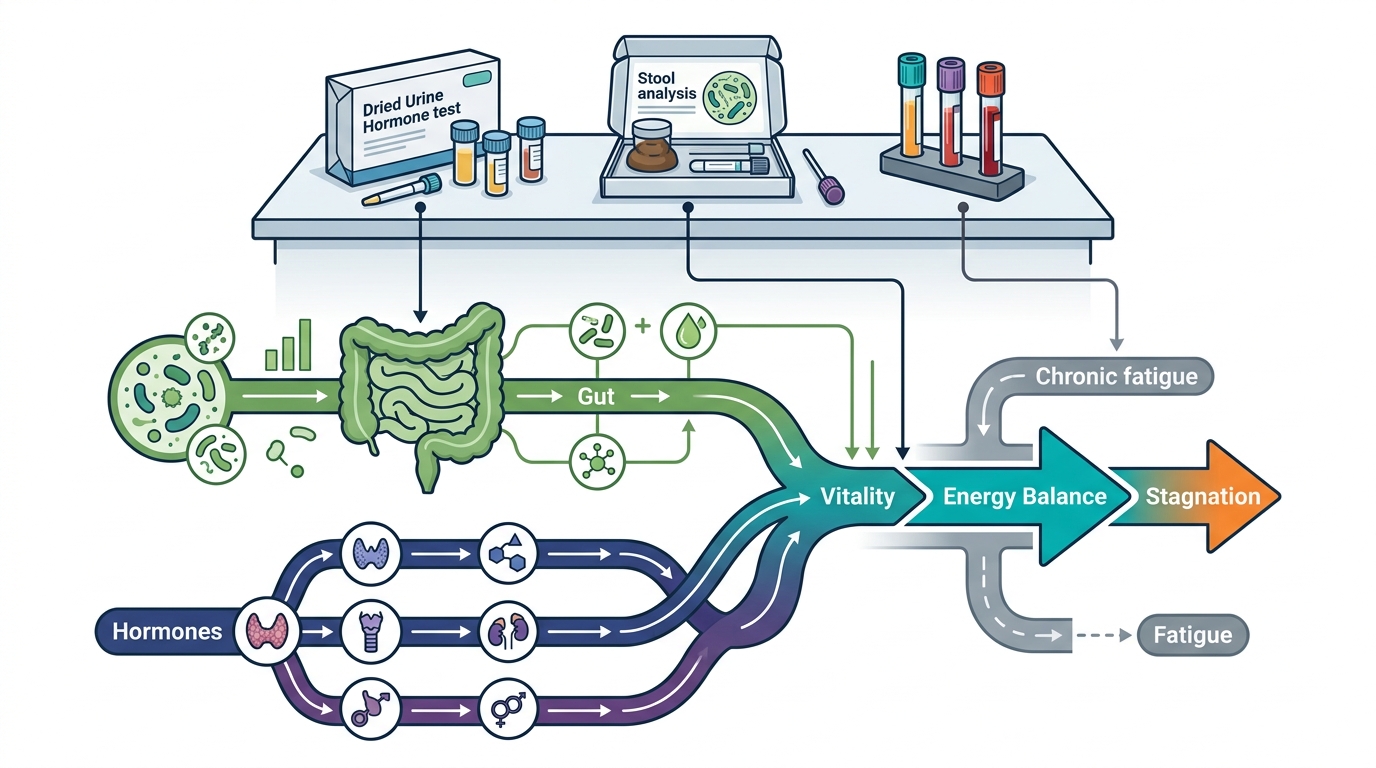
The adrenal glands play a crucial role in regulating stress hormones like cortisol. When the body is under chronic stress, these glands can become dysregulated, leading to fatigue. Functional medicine assesses adrenal function through detailed saliva or urine testing. This allows for precise interventions to support the hypothalamic-pituitary-adrenal axis. Restoring adrenal balance is often the first step in regaining energy levels.
The Gut-Health Connection
The gut is often referred to as the second brain due to its extensive network of neurons and its influence on overall health. Gut issues, such as leaky gut syndrome, can lead to systemic inflammation and contribute to both fatigue and hormonal imbalances. According to the International Foundation for Gastrointestinal Disorders, gut health is foundational to immune function and nutrient absorption. When the gut lining is compromised, toxins and undigested food particles can enter the bloodstream, triggering an immune response.
Leaky Gut and Inflammation
Leaky gut, or increased intestinal permeability, allows substances that should stay in the gut to leak into the bloodstream. This process triggers inflammation, which can disrupt hormone production and energy metabolism. Functional medicine addresses this by focusing on gut repair protocols. These protocols often include dietary changes, probiotics, and specific nutrients that support the intestinal lining.
Microbiome Balance
The gut microbiome consists of trillions of bacteria that play a vital role in digestion, immunity, and even mood regulation. An imbalance in the microbiome, known as dysbiosis, can lead to various health issues. Functional medicine uses advanced stool testing to analyze the microbiome composition. This data guides targeted interventions to restore microbial balance and improve overall health.
Addressing Hormone Imbalance
Hormone imbalance can manifest in numerous ways, including weight gain, mood swings, and fatigue. Hormones are chemical messengers that regulate almost every process in the body. When levels are off, the entire system can become disrupted. Functional medicine evaluates hormone health through comprehensive testing that looks at not just the levels, but also the metabolism and clearance of hormones.
Thyroid Function
The thyroid gland regulates metabolism, energy production, and body temperature. Hypothyroidism is a common condition that causes fatigue and weight gain. Standard tests often only measure TSH, but functional medicine looks at T3, T4, and thyroid antibodies. This comprehensive view allows for more accurate diagnosis and treatment. Restoring thyroid function is crucial for resolving fatigue and improving metabolic health.
Steroid Hormones
Steroid hormones, including estrogen, progesterone, and testosterone, play a key role in reproductive health and energy levels. Imbalances in these hormones can lead to conditions like PCOS, menopause symptoms, and low libido. Functional medicine assesses these hormones through detailed testing that considers their metabolic pathways. This allows for personalized interventions to restore balance and improve quality of life.
Standard vs. Functional Care
Understanding the difference between standard medical care and functional medicine is crucial for patients seeking long-term solutions. Standard care often focuses on diagnosing disease and prescribing medication to manage symptoms. Functional medicine, on the other hand, focuses on identifying and treating the root cause of illness. This approach is particularly effective for complex, chronic conditions.
| Aspect | Standard Medicine | Functional Medicine |
|---|---|---|
| Focus | Symptom Management | Root Cause Resolution |
| Approach | PharmacologicalLifestyle and Nutritional | |
| Testing | Standard Panels | Comprehensive Advanced |
| Duration | Short-term | Long-term Health |
Key Takeaways
- Functional medicine treats the body as an interconnected system, addressing root causes rather than just symptoms.
- Chronic fatigue is often linked to mitochondrial dysfunction, adrenal issues, and nutrient deficiencies.
- Gut health is foundational to immune function and hormone balance, with leaky gut contributing to systemic inflammation.
- Comprehensive hormone testing goes beyond standard panels to assess metabolism and clearance pathways.
- Personalized treatment plans are tailored to individual biochemical uniqueness for optimal results.
- Direct Integrative Care offers virtual assessments to help patients begin their journey to health.
- Restoring gut microbiome balance is essential for resolving chronic inflammation and improving energy levels.
Frequently Asked Questions
What is functional medicine?
Functional medicine is a science-based discipline that focuses on identifying and addressing the root cause of disease by treating the body as an interconnected system.
How does functional medicine treat chronic fatigue?
It treats chronic fatigue by investigating mitochondrial function, adrenal health, and nutrient deficiencies through comprehensive testing and personalized interventions.
Can functional medicine help with gut issues?
Yes, functional medicine addresses gut issues by analyzing the microbiome, repairing the gut lining, and restoring microbial balance through targeted protocols.
What testing is used for hormone imbalance?
Functional medicine uses comprehensive testing that includes thyroid panels, steroid hormones, and their metabolic pathways to assess hormone health accurately.
Is functional medicine covered by insurance?
Coverage varies by provider and plan. It is best to check with your insurance company regarding specific services and testing covered under your policy.
How long does it take to see results?
Results vary by individual, but many patients report improvements in energy and digestion within weeks of starting personalized treatment plans.
What is the role of the gut in hormone health?
The gut plays a crucial role in hormone metabolism and elimination. An unhealthy gut can lead to hormone imbalances and systemic inflammation.
Contact Us
If you are struggling with chronic fatigue, gut issues, or hormone imbalance, functional medicine may offer the solutions you need. Dr. Kim at Direct Integrative Care specializes in this approach, providing personalized care to help you regain your health. We offer virtual assessments to make it easier for you to start your journey. Contact us today to schedule your consultation and take the first step toward lasting wellness.