

Chronic fatigue affects approximately 15 to 20 million people in the United States, yet standard medical protocols often fail to address the underlying biological drivers. According to the Centers for Disease Control and Prevention, this persistent exhaustion is frequently linked to complex interactions between the digestive system and endocrine function. Functional medicine offers a distinct pathway by treating the body as an interconnected system rather than a collection of isolated symptoms. This approach seeks to restore balance through targeted nutritional, lifestyle, and clinical interventions. (Functional Medicine Integrative Functional)
Understanding the Root Cause of Fatigue
Chronic fatigue is not merely a lack of energy. It is a systemic signal that the body is struggling to maintain homeostasis. In conventional medicine, fatigue is often treated with stimulants or vague lifestyle advice. Functional medicine digs deeper to identify the specific biological disruptions causing this depletion.
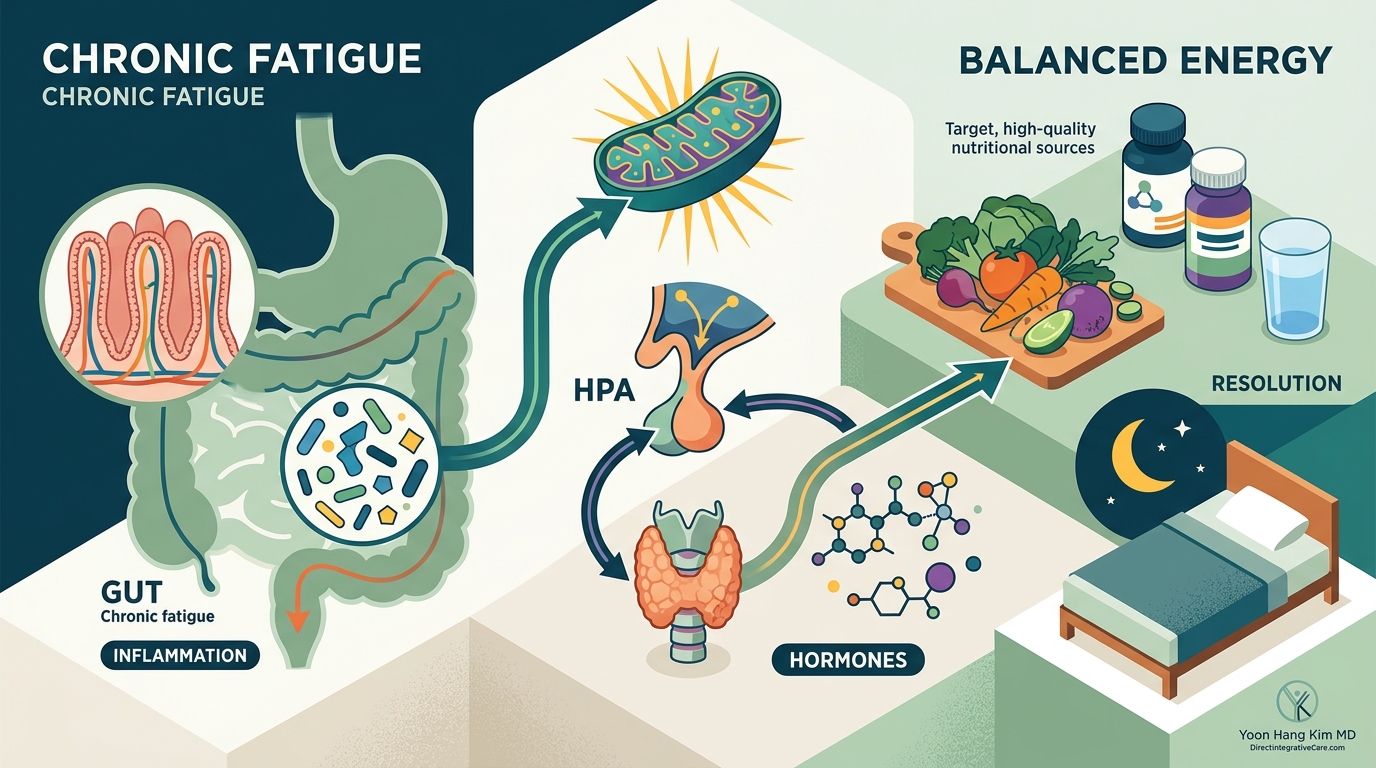
One primary driver is mitochondrial dysfunction. Mitochondria are the powerhouses of the cell. When they fail to produce adequate adenosine triphosphate (ATP), cellular energy drops. This leads to the profound exhaustion patients describe. Another critical factor is adrenal dysregulation. The adrenal glands manage the stress response. When they are overworked, cortisol levels become erratic. This disrupts sleep cycles and energy production.
According to the National Institutes of Health, chronic stress significantly impacts the hypothalamic-pituitary-adrenal (HPA) axis. This disruption creates a feedback loop that perpetuates fatigue. Patients often feel tired even after sleeping. They may experience brain fog and muscle weakness. These symptoms require a nuanced diagnostic approach to resolve effectively.
The Gut-Hormone Axis Explained
The connection between gut health and hormonal balance is profound. The digestive system is not just for nutrient absorption. It plays a central role in detoxification and immune regulation. When the gut barrier becomes compromised, systemic inflammation follows. This inflammation directly interferes with hormone signaling.
Gut dysbiosis refers to an imbalance in the microbial community of the intestines. This imbalance can lead to increased intestinal permeability. Often called leaky gut, this condition allows toxins to enter the bloodstream. The immune system responds by creating inflammation. This inflammatory state can block hormone receptors. For example, insulin resistance often stems from gut-derived inflammation.
Hormone imbalance is another common outcome of poor gut health. The gut microbiome helps metabolize and excrete excess hormones. When this process is impaired, hormones like estrogen and cortisol can accumulate. This leads to conditions such as estrogen dominance or adrenal fatigue. Patients may experience weight gain, mood swings, and persistent tiredness.
Research published in the journal Nature Reviews Endocrinology highlights the bidirectional relationship between the gut microbiota and the endocrine system. A healthy microbiome supports hormonal clarity. A disrupted one creates hormonal chaos. Restoring gut integrity is therefore a prerequisite for hormonal balance.
Diagnostic Approach in Functional Medicine
Functional medicine relies on advanced diagnostics to uncover hidden imbalances. Standard blood tests often fall short in detecting early-stage dysfunction. Functional practitioners use specialized testing to look at metabolic markers, hormone metabolites, and gut health indicators.
Comprehensive stool analysis is a key tool. It evaluates the diversity of gut bacteria and identifies pathogens. This test reveals how well the gut is digesting food and absorbing nutrients. It also checks for markers of inflammation. These insights guide personalized dietary interventions.
Hormone testing goes beyond standard panels. It often includes saliva or urine tests to measure hormone levels throughout the day. This reveals the daily rhythm of cortisol and other hormones. It helps identify patterns that standard blood tests miss. For instance, it can show if cortisol is flat in the morning and high at night.
Food sensitivity testing is another critical component. It identifies foods that trigger immune responses. These reactions can cause inflammation and fatigue. By eliminating trigger foods, patients can reduce their inflammatory burden. This allows the body to heal and regain energy.
Treatment Strategies for Restoration
Treatment in functional medicine is highly personalized. It focuses on removing obstacles to health and replenishing what is missing. The goal is to restore function, not just suppress symptoms. This involves a combination of dietary changes, supplements, and lifestyle adjustments.
Dietary intervention is the foundation of treatment. An anti-inflammatory diet is often recommended. This diet emphasizes whole foods, healthy fats, and lean proteins. It eliminates processed foods, sugar, and common allergens. This reduces the load on the digestive system and immune response.
Supplementation plays a supportive role. Adaptogens help the body manage stress. Probiotics restore gut flora balance. Magnesium supports energy production and sleep. These supplements are chosen based on individual test results. They are not one-size-fits-all solutions.
Lifestyle modifications are equally important. Sleep hygiene is crucial for hormonal repair. Stress management techniques like meditation or yoga lower cortisol levels. Regular movement improves mitochondrial function. These habits create a sustainable foundation for long-term health.
Virtual Assessment Process
Accessing functional medicine care has become more convenient with virtual options. Direct Integrative Care offers virtual assessments for patients who prefer remote care. This allows for comprehensive evaluation without the need for travel.
The virtual assessment begins with a detailed health history. The practitioner reviews past medical records and current symptoms. This helps identify patterns and potential root causes. The patient then completes a virtual assessment form to provide additional context.
Following the assessment, a personalized plan is developed. This plan includes specific dietary recommendations, supplement protocols, and lifestyle goals. The practitioner provides ongoing support to ensure adherence and monitor progress. This continuous care model is essential for lasting change.
For those interested in this approach, you can start by visiting the Virtual Assessment Form to begin the process. This initial step connects you with a provider who understands the complexity of chronic conditions.
Key Takeaways
- Chronic fatigue is often a symptom of mitochondrial dysfunction or adrenal dysregulation, not just a lack of sleep.
- The gut-hormone axis demonstrates that digestive health directly impacts endocrine function and systemic inflammation.
- Gut dysbiosis can lead to leaky gut, which triggers immune responses that block hormone receptors.
- Advanced diagnostics, such as stool analysis and saliva hormone testing, are essential for uncovering hidden imbalances.
- Personalized treatment involves anti-inflammatory diets, targeted supplementation, and stress management techniques.
- Virtual assessments provide accessible care for patients seeking a root-cause approach to health.
- Direct Integrative Care offers specialized services for those struggling with complex chronic conditions.
Frequently Asked Questions
What is functional medicine?
Functional medicine is a systems-biology-based approach that focuses on identifying and addressing the root cause of disease. It views the body as an interconnected network rather than a collection of separate parts.
How does gut health affect hormones?
The gut microbiome helps metabolize and excrete excess hormones. When gut health is compromised, this process is disrupted, leading to hormonal imbalances such as estrogen dominance or cortisol dysregulation.
Can functional medicine help with chronic fatigue?
Yes, by addressing underlying issues like mitochondrial dysfunction, adrenal fatigue, and gut inflammation, functional medicine can significantly improve energy levels and reduce chronic exhaustion.
What tests are used in functional medicine?
Common tests include comprehensive stool analysis, advanced hormone panels, food sensitivity testing, and micronutrient assessments. These provide a detailed picture of metabolic and digestive health.
Is virtual care effective for functional medicine?
Virtual care is highly effective for functional medicine. It allows for detailed consultations, review of test results, and personalized care planning without the need for in-person visits.
How long does it take to see results?
Results vary by individual. Some patients feel improvements in energy and digestion within weeks. Others may take several months to fully restore balance. Consistency with the treatment plan is key.
What is the role of diet in functional medicine?
Diet is the primary tool for reducing inflammation and supporting gut health. An anti-inflammatory diet tailored to individual sensitivities is often the first step in treatment.
Contact Direct Integrative Care
If you are struggling with chronic fatigue, gut issues, or hormone imbalance, functional medicine offers a path to recovery. Direct Integrative Care provides expert guidance to help you regain your health. We specialize in uncovering the root causes of your symptoms and creating a personalized plan for restoration.
Take the first step toward feeling like yourself again. Visit our home page to learn more about our services. You can also reach out directly via phone or text at (210) 981-6106. For your convenience, we offer a Virtual Assessment Form to get started. Our team is ready to support you on your journey to optimal health.