
Functional medicine represents a paradigm shift in healthcare, moving away from symptom suppression toward root cause resolution. According to the Institute for Functional Medicine, this approach focuses on identifying and addressing the root cause of disease rather than merely treating symptoms. This distinction is critical for patients seeking long-term wellness. The model prioritizes a systems biology-based approach to complex chronic diseases. It views the body as an interconnected network rather than a collection of separate organs. This holistic perspective allows practitioners to tailor treatments to individual genetic, environmental, and lifestyle factors. Understanding these differences helps patients make informed decisions about their health journey. (Functional Medicine Integrative Functional)
Core Definition and Philosophy
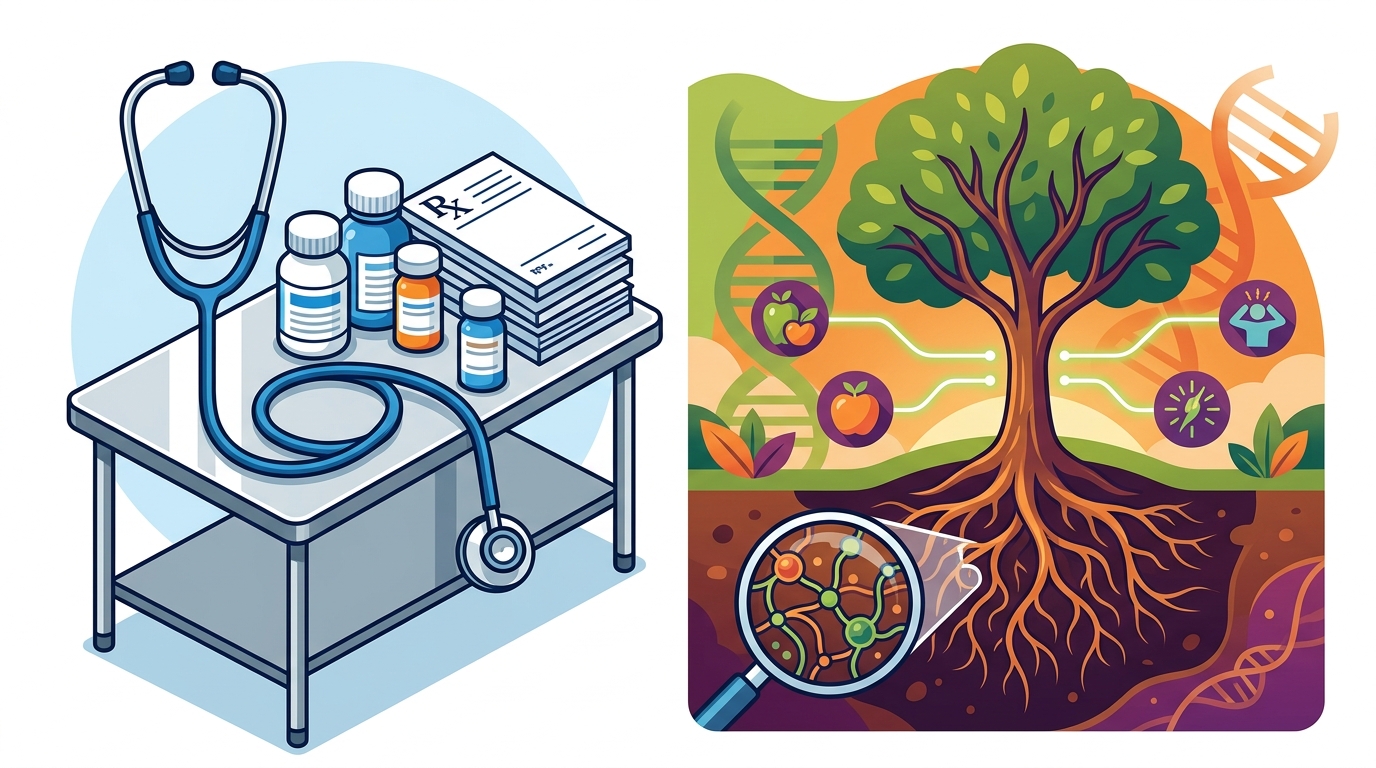
Functional medicine is a science-based discipline that investigates the origins of illness. It seeks to understand the complex web of interactions between genetics, environment, and lifestyle. This field operates on the principle that every person is unique. Therefore, no two individuals will have the exact same treatment plan. The goal is to restore balance and promote optimal function. This stands in contrast to conventional medicine, which often focuses on acute care and disease management.
Conventional medicine is a standardized approach to healthcare. It relies heavily on established protocols and guidelines. This system excels in emergency situations and acute care. It is designed to stabilize patients and manage immediate threats. However, it often struggles with chronic conditions that develop over time. The focus is typically on diagnosing a specific disease and prescribing a standard treatment. This approach can sometimes overlook the underlying causes of the condition.
Integrative functional medicine combines the best of both worlds. It uses the precision of conventional diagnostics alongside the holistic view of functional medicine. This integration allows for a more comprehensive care plan. Patients benefit from advanced testing and targeted interventions. The aim is not just to treat the disease but to heal the person. This approach is particularly effective for complex chronic conditions.
Methodology and Diagnostic Approaches
The diagnostic process in functional medicine is deeply investigative. Practitioners spend significant time understanding the patient's history. They look for patterns and connections that others might miss. This involves analyzing lab results in a broader context. Standard reference ranges often indicate the absence of disease. Functional medicine looks for optimal ranges for health. This proactive stance helps identify issues before they become severe.
Conventional diagnostics rely on established criteria for disease. Doctors look for specific markers that match diagnostic manuals. If a patient does not meet the criteria, they may not receive a diagnosis. This can leave patients feeling unheard or dismissed. Functional medicine addresses this gap by exploring subtle imbalances. It asks why the imbalance exists in the first place. This inquiry leads to more personalized and effective interventions.
Advanced testing is a cornerstone of functional medicine. It includes specialized blood work, genetic testing, and microbiome analysis. These tools provide a detailed map of the patient's health. They reveal hidden factors contributing to chronic illness. For example, gut health plays a crucial role in immune function. Conventional medicine may treat symptoms of gut issues. Functional medicine works to restore gut integrity. This foundational work supports overall wellness.
The Patient-Practitioner Dynamic
Functional medicine emphasizes a strong partnership between patient and practitioner. This relationship is built on trust and open communication. Practitioners act as guides and educators. They empower patients to take an active role in their health. This collaborative approach fosters accountability and motivation. Patients feel heard and valued throughout the process.
In conventional medicine, the dynamic is often more hierarchical. The doctor is the expert who prescribes. The patient is the recipient who follows instructions. This model can be efficient for acute issues. However, it may not support long-term lifestyle changes. Patients may struggle to adhere to treatments they do not fully understand. Functional medicine bridges this gap by explaining the "why" behind every recommendation.
Virtual assessments have made functional medicine more accessible. Patients can connect with experts from anywhere. This flexibility removes geographical barriers to care. It allows for continuous monitoring and support. The focus remains on building a sustainable health plan. This model is ideal for busy individuals seeking convenience. It also ensures consistent care without frequent office visits.
Treatment Philosophy and Tools
Treatment in functional medicine is highly individualized. It uses a variety of tools to restore balance. These include nutrition, supplements, lifestyle changes, and stress management. The goal is to support the body's natural healing mechanisms. Practitioners avoid unnecessary medications when possible. They prioritize non-invasive interventions first. This approach minimizes side effects and promotes long-term health.
Conventional treatment often relies on pharmaceuticals. Medications are effective for managing symptoms and acute conditions. They can be life-saving in emergencies. However, they may not address the root cause. Long-term use can sometimes lead to new health issues. Functional medicine seeks to reduce reliance on drugs. It aims to resolve the underlying dysfunction. This reduces the need for lifelong medication.
Nutrition is a powerful tool in functional medicine. Food is viewed as medicine. Practitioners design specific diets to address individual needs. This may involve eliminating trigger foods or adding nutrient-dense options. The focus is on whole, unprocessed foods. This approach supports cellular health and reduces inflammation. It is a fundamental shift from standard dietary advice.
Comparative Analysis
Understanding the differences helps in choosing the right path. The table below summarizes the key distinctions between the two models.
| Feature | Functional Medicine | Conventional Medicine |
|---|---|---|
| Focus | Root cause and prevention | Symptom management and disease treatment |
| Approach | Holistic and individualized | Standardized and protocol-driven |
| Time with Patient | Extended consultations | Shorter, visit-focused interactions |
| Diagnosis | Systems biology and advanced testing | Clinical criteria and standard labs |
| Treatment | Lifestyle, nutrition, and targeted supplements | Pharmaceuticals and surgery |
Key Takeaways
- Functional medicine focuses on identifying the root cause of chronic disease rather than just treating symptoms.
- It utilizes a systems biology approach to understand the complex interactions between genetics and environment.
- Practitioners spend more time with patients to build a comprehensive health history and partnership.
- Advanced diagnostic testing is used to find optimal health ranges, not just disease markers.
- Treatment plans are highly individualized, often prioritizing nutrition and lifestyle changes.
- Virtual assessments provide accessible care for patients seeking integrative health solutions.
- Conventional medicine remains essential for acute care and emergency interventions.
Frequently Asked Questions
What is the main difference between functional and conventional medicine?
Functional medicine focuses on the root cause of disease and individualized care. Conventional medicine focuses on symptom management and standardized protocols.
Is functional medicine covered by insurance?
Coverage varies by provider and plan. Some tests and services may be covered. It is best to check with your insurance company directly.
How long does a functional medicine consultation take?
Initial consultations are typically longer, often lasting 60 to 90 minutes. This allows for a deep dive into health history and goals.
Can functional medicine replace conventional medicine?
It is not a replacement but a complement. It works best alongside conventional care for chronic conditions.
What types of conditions does functional medicine treat?
It is effective for chronic conditions such as autoimmune diseases, hormonal imbalances, and digestive issues.
Do I need a referral to see a functional medicine doctor?
Referrals are not always required. You can often schedule a virtual assessment directly.
What is the role of nutrition in functional medicine?
Nutrition is a primary tool for healing. Practitioners design specific diets to address individual needs and reduce inflammation.
Contact Direct Integrative Care
Ready to explore a more personalized approach to your health? Direct Integrative Care offers expert functional medicine services tailored to your unique needs. Our team is dedicated to helping you achieve optimal wellness through integrative practices. Schedule your virtual assessment today to begin your journey. Visit our homepage to learn more about our services. You can also reach us via phone or text at (210) 981-6106. For more information on our web disclosures, please visit our web disclosure page. Take the first step toward a healthier, balanced life with professional guidance.