
Functional medicine is a systems biology-based approach that focuses on identifying and addressing the root cause of disease rather than merely suppressing symptoms. This paradigm shift is critical because conventional medicine often treats chronic conditions as isolated events. According to the Institute for Functional Medicine, functional medicine practitioners spend significantly more time with patients to uncover complex interactions within the body. This detailed investigation allows for personalized care plans that address the whole person. The goal is to restore balance and promote long-term wellness through targeted interventions.
Root Cause Analysis vs Symptom Management
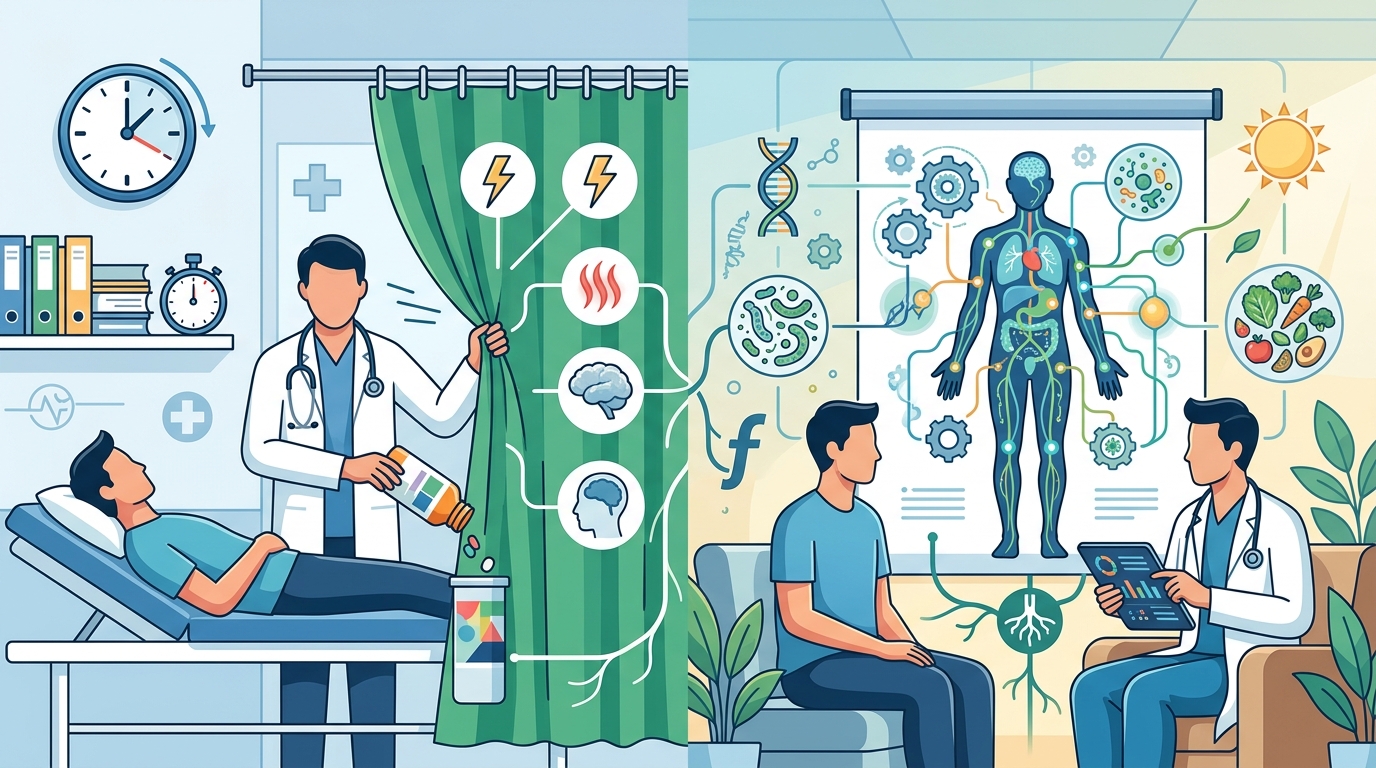
The most significant difference lies in how each system approaches illness. Conventional medicine is often reactive. It focuses on diagnosing a disease and prescribing medication to manage the resulting symptoms. For example, a patient with high blood pressure receives a prescription to lower the number. The underlying lifestyle factors or genetic predispositions may remain unaddressed. This approach is highly effective for acute care, such as treating infections or trauma. However, it often falls short in managing chronic diseases like diabetes or autoimmune disorders.
Functional medicine is proactive and investigative. It asks why the disease occurred in the first place. Practitioners look at the complex web of interactions between genetics, environment, and lifestyle. This method seeks to identify the root cause of dysfunction. By addressing these root causes, the body can heal itself. This approach aligns with the principles found in integrative functional medicine frameworks. The focus is on restoring physiological balance rather than just masking symptoms.
Patient-Centered Care Models
The relationship between provider and patient differs markedly between the two systems. In conventional settings, the model is often provider-centered. The doctor makes decisions based on standardized protocols. Patients may have limited time to discuss their full history. This can lead to a fragmented care experience where the patient feels like a set of symptoms rather than a whole person.
Functional medicine flips this dynamic. It is deeply patient-centered. The practitioner acts as a partner in the healing journey. This model requires extensive listening and empathy. It acknowledges that every patient is unique. Genetic makeup and environmental exposures create a distinct health profile for each individual. This personalized approach is essential for effective long-term health management. For more insights on this personalized care model, you can explore virtual assessment options available for new patients.
Diagnostic Tools and Testing
Diagnostic strategies are another critical point of divergence. Conventional medicine relies heavily on standard laboratory ranges. Tests are designed to detect disease states that have already manifested. If a test result falls within the "normal" range, the patient is often told they are healthy. This can be frustrating for patients who still feel unwell despite normal results.
Functional medicine uses advanced diagnostic tools to detect dysfunction before disease occurs. It looks at optimal ranges rather than just normal ranges. This includes specialized testing for gut health, hormone balance, and nutrient deficiencies. These tests provide a deeper understanding of physiological processes. They allow practitioners to intervene early. This proactive testing strategy is a hallmark of integrative functional medicine practices. It enables precise targeting of therapeutic interventions.
Treatment Philosophy and Lifestyle
2Treatment methods reflect the underlying philosophy of each system. Conventional medicine primarily uses pharmaceutical drugs and surgery. These tools are powerful and necessary for many conditions. They are often the first line of defense in acute situations. However, they may not address the lifestyle factors contributing to chronic illness.
Functional medicine emphasizes lifestyle modifications as primary treatments. Nutrition, sleep, stress management, and movement are prescribed as medicine. Supplements and botanicals are used to support bodily functions. The goal is to empower patients to take control of their health. This holistic approach fosters sustainable change. It encourages patients to become active participants in their wellness. For those interested in starting this journey, contact information is readily available for scheduling.
Comparison of Medical Approaches
The table below summarizes the key distinctions between functional and conventional medicine. This comparison highlights how each system approaches care, diagnosis, and treatment.
| Feature | Conventional Medicine | Functional Medicine |
|---|---|---|
| Primary Focus | Disease management and symptom suppression | Root cause identification and prevention |
| Patient Interaction | Provider-centered, short visits | Patient-centered, extended consultations |
| Diagnostic Approach | Standard lab ranges for disease detection | Advanced testing for optimal function |
| Treatment Methods | Pharmaceuticals and surgery | Lifestyle, nutrition, and targeted supplements |
| Goal | Acute care and stabilization | Long-term wellness and restoration |
Key Takeaways
- Functional medicine is a systems biology-based approach that focuses on identifying and addressing the root cause of disease.
- Conventional medicine is highly effective for acute care but often struggles with chronic disease management.
- Functional practitioners spend more time with patients to understand their unique genetic and environmental factors.
- Diagnostic tools in functional medicine look for optimal ranges rather than just normal disease ranges.
- Lifestyle modifications are considered primary treatments in functional medicine, not just adjuncts.
- The patient-provider relationship is collaborative and partnership-based in functional medicine.
- Integrative approaches combine the best of both worlds for comprehensive patient care.
Frequently Asked Questions
Is functional medicine covered by insurance?
Coverage varies by provider and plan. Some insurance companies cover specific lab tests or consultations. However, many functional medicine services are considered elective. It is important to check with your insurance provider directly. Some practices offer cash-pay options or sliding scale fees.
Can functional medicine replace conventional medicine?
Functional medicine does not seek to replace conventional medicine. Instead, it complements it. Acute conditions like fractures or infections still require conventional emergency care. Functional medicine is particularly valuable for managing chronic conditions and preventing future illness.
How long does a functional medicine appointment take?
Initial consultations are typically longer than standard visits. They often last between 60 to 90 minutes. This allows the practitioner to gather a comprehensive health history. Follow-up visits may be shorter but still focus on detailed progress reviews.
What types of conditions does functional medicine treat?
Functional medicine is effective for a wide range of chronic conditions. These include autoimmune diseases, digestive disorders, hormonal imbalances, and fatigue. It is also used for preventive health and wellness optimization. The approach is tailored to the individual's specific needs.
Do I need a referral to see a functional medicine practitioner?
In many cases, you do not need a referral. You can often self-refer to a functional medicine doctor. However, some insurance plans may require a primary care physician's referral for coverage. It is best to verify this with your insurer.
What is the difference between integrative and functional medicine?
Integrative medicine combines conventional and alternative therapies. Functional medicine is a specific subset that focuses on root cause analysis. Both approaches prioritize patient-centered care. Integrative medicine may include more diverse alternative modalities like acupuncture or yoga.
How do I choose the right functional medicine practitioner?
Look for certified practitioners with experience in your specific health concerns. Check their credentials and patient reviews. Consider their approach to testing and treatment. A good practitioner will listen to your concerns and explain their plan clearly.
Start Your Journey to Wellness
Understanding the differences between functional and conventional medicine is the first step toward better health. If you are struggling with chronic symptoms or seeking preventive care, functional medicine may offer the answers you need. Take control of your health journey today. Contact us to schedule your virtual assessment and discover a personalized path to wellness. Visit our home page to learn more about our services and how we can help you achieve optimal health.