

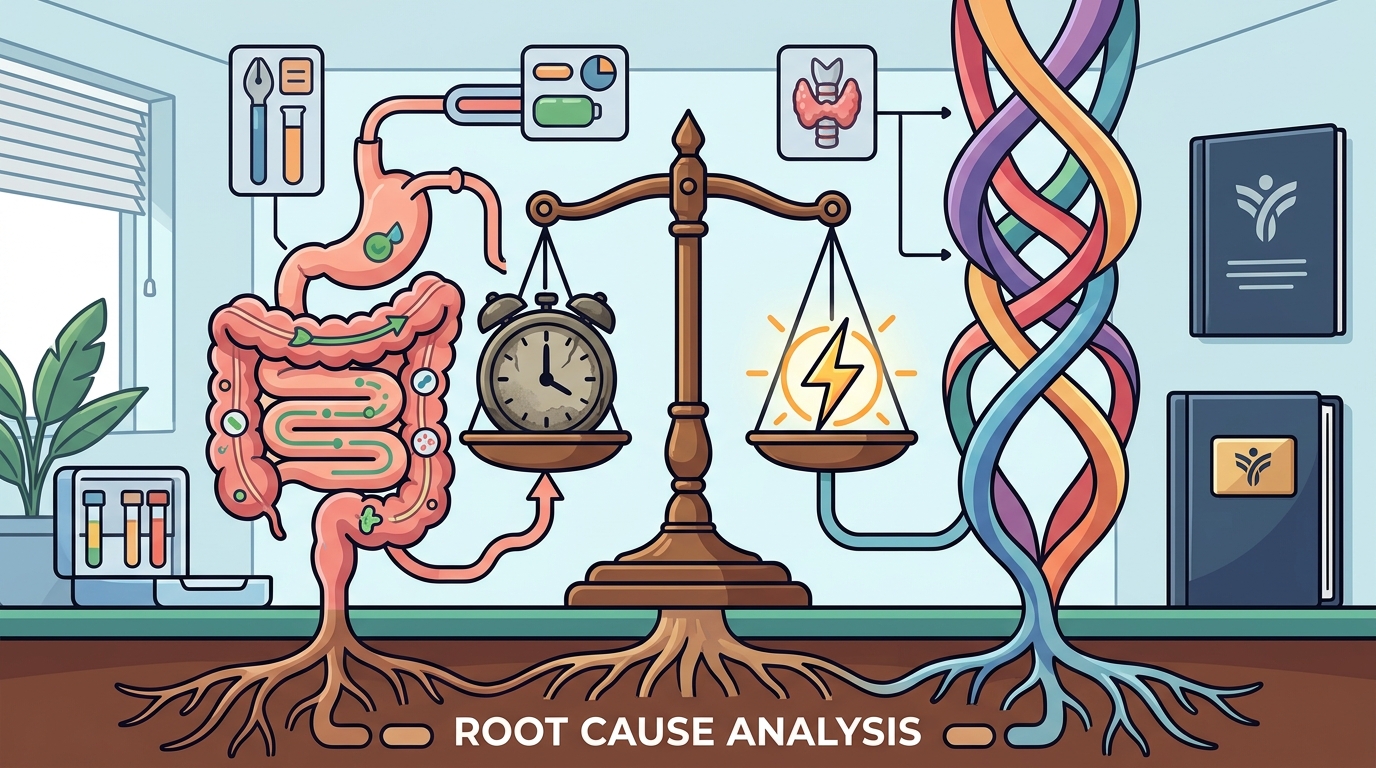
Chronic fatigue, persistent digestive distress, and hormonal imbalances are not isolated complaints. They are often interconnected symptoms of underlying systemic dysfunction. According to the National Institutes of Health, functional medicine addresses the root causes of disease rather than merely suppressing symptoms, offering a holistic pathway to restoration for patients struggling with these complex conditions. (Functional Medicine Integrative Functional)
Understanding Functional Medicine
Functional medicine is a systems biology-based approach that focuses on identifying and addressing the root cause of disease. Unlike conventional medicine, which often treats symptoms in isolation, functional medicine views the body as an interconnected network. This perspective is crucial for patients experiencing multiple overlapping symptoms.
Functional medicine is a patient-centered approach to healthcare that emphasizes the underlying causes of chronic disease. It utilizes advanced diagnostic testing to uncover imbalances in physiology, nutrition, and environmental factors. This method allows practitioners to create personalized treatment plans that restore balance to the body's complex systems.
For individuals suffering from chronic fatigue or gut issues, this approach offers hope where conventional methods may have fallen short. By looking at the whole person, practitioners can identify triggers that standard tests might miss. This comprehensive view is essential for long-term health improvement.
The Gut-Brain Axis Connection
The gut and the brain communicate constantly through the vagus nerve and various biochemical pathways. When the gut is compromised, it directly impacts brain function, mood, and energy levels. This connection is often the missing link in treating chronic fatigue and hormonal issues.
Gut dysbiosis, an imbalance in the microbial community of the intestines, can lead to increased intestinal permeability. This condition, often called "leaky gut," allows toxins to enter the bloodstream, triggering systemic inflammation. This inflammation can disrupt hormonal signaling and deplete energy reserves.
Research indicates that gut health plays a pivotal role in neurotransmitter production. Approximately 95 percent of the body's serotonin is produced in the gut. When gut health is compromised, serotonin production drops, leading to mood disorders and fatigue. This biological reality underscores the importance of addressing digestive health in any treatment plan.
Hormonal Dysregulation Explained
Hormones act as chemical messengers that regulate nearly every process in the body. When they are out of balance, the consequences can be severe and wide-ranging. Hormonal imbalance is a condition where there is too much or too little of a hormone in the blood.
Chronic stress is a primary driver of hormonal disruption. When the body is under constant stress, the adrenal glands produce excess cortisol. Over time, this can lead to adrenal fatigue, where the glands become exhausted and cannot produce adequate hormones. This state results in persistent tiredness, weight gain, and anxiety.
Thyroid function is also closely linked to gut health. The conversion of thyroid hormones from their inactive to active form occurs in the gut. If the gut is inflamed or infected, this conversion is impaired, leading to hypothyroid symptoms such as fatigue, cold intolerance, and weight gain. Addressing gut health is therefore a critical step in restoring hormonal balance.
Chronic Fatigue and Mitochondrial Health
Chronic fatigue is not simply feeling tired. It is a complex condition characterized by extreme exhaustion that does not improve with rest. Chronic fatigue syndrome is a disorder characterized by extreme fatigue that cannot be explained by any underlying medical condition.
At the cellular level, fatigue is often linked to mitochondrial dysfunction. Mitochondria are the powerhouses of the cell, responsible for producing energy. When mitochondria are damaged or inefficient, the body cannot produce enough energy to meet its needs. This leads to the profound exhaustion experienced by patients.
Inflammation is another key contributor to chronic fatigue. Systemic inflammation can disrupt the blood-brain barrier and impair cognitive function. This "brain fog" is a common complaint among those with chronic fatigue. Reducing inflammation through diet and lifestyle changes is essential for restoring energy levels.
The Diagnostic Approach
Effective treatment begins with accurate diagnosis. Functional medicine practitioners use a variety of advanced tests to assess health. These tests go beyond standard blood work to provide a deeper understanding of the patient's condition.
| Diagnostic Category | Purpose | Relevance to Symptoms |
|---|---|---|
| Comprehensive Stool Analysis | Assesses gut microbiome balance | Identifies pathogens and dysbiosis causing gut issues |
| Hormone Panel | Evaluates adrenal and sex hormones | Diagnoses root causes of fatigue and imbalance |
| Nutritional Blood Work | Checks vitamin and mineral levels | Identifies deficiencies affecting energy production |
| Food Sensitivity Testing | Detects immune reactions to foods | Reduces inflammation and gut irritation |
These tests allow practitioners to create a personalized roadmap for recovery. By identifying specific imbalances, treatment can be targeted and effective. This precision medicine approach ensures that patients receive the care they need.
Treatment Strategies
Treatment in functional medicine focuses on lifestyle changes, nutrition, and targeted supplementation. The goal is to support the body's natural healing processes. This approach is sustainable and addresses the root causes of disease.
Diet plays a crucial role in healing. An anti-inflammatory diet rich in whole foods can reduce gut irritation and support hormonal balance. Eliminating processed foods, sugar, and common allergens can significantly improve symptoms. This dietary shift is often the first step in recovery.
Stress management is equally important. Techniques such as mindfulness, yoga, and adequate sleep can help regulate the nervous system. By reducing stress, the body can focus on healing and restoration. This holistic approach ensures comprehensive care.
Key Takeaways
- Functional medicine addresses the root causes of chronic fatigue, gut issues, and hormone imbalance.
- The gut-brain axis is a critical connection influencing mood and energy levels.
- Gut dysbiosis can lead to systemic inflammation and hormonal disruption.
- Chronic fatigue is often linked to mitochondrial dysfunction and inflammation.
- Advanced diagnostic testing is essential for accurate diagnosis and personalized treatment.
- Anti-inflammatory diets and stress management are key components of recovery.
- Virtual assessments are available for convenient access to care.
Frequently Asked Questions
How does functional medicine differ from conventional medicine?
Functional medicine focuses on identifying and treating the root causes of disease, while conventional medicine often focuses on symptom management. This approach provides a more comprehensive and personalized treatment plan.
Can functional medicine help with chronic fatigue?
Yes, functional medicine can help by addressing underlying issues such as mitochondrial dysfunction, inflammation, and nutrient deficiencies that contribute to chronic fatigue.
What tests are used to diagnose gut issues?
Comprehensive stool analysis is commonly used to assess the gut microbiome and identify pathogens or dysbiosis. This test provides detailed insights into digestive health.
How do hormones affect energy levels?
Hormones regulate metabolism and energy production. Imbalances in thyroid, adrenal, or sex hormones can lead to fatigue, weight gain, and mood changes.
Is functional medicine covered by insurance?
Coverage varies by provider and plan. It is recommended to check with your insurance company regarding coverage for functional medicine services and testing.
What is the role of diet in functional medicine?
Diet is a cornerstone of functional medicine. An anti-inflammatory diet helps reduce gut irritation, support hormonal balance, and improve overall energy levels.
How long does it take to see results?
Timeline varies depending on the individual and the severity of the condition. Some patients experience improvement within weeks, while others may take several months.
Schedule Your Assessment
If you are struggling with chronic fatigue, gut issues, or hormone imbalance, functional medicine may offer the solutions you need. Take the first step towards restoring your health by scheduling a virtual assessment with Dr. Kim. Visit our Virtual Assessment Form to begin your journey to wellness. For more information, explore our Integrative Functional Medicine services.