
The landscape of functional medicine has shifted dramatically in recent years. According to the Institute for Functional Medicine, over 60% of patients now prefer virtual consultations for initial assessments and ongoing care management. This surge in demand has created a crowded market of telemedicine platforms claiming to offer functional health solutions. However, not all virtual functional medicine providers are created equal. Understanding the difference between generic telehealth apps and those staffed by IFM-certified practitioners is critical for achieving genuine health outcomes. This guide breaks down the key distinctions to help you make an informed decision. (Functional Medicine Integrative Functional)
What is IFM Certification?
Functional Medicine is a systems biology-based approach that focuses on identifying and addressing the root cause of disease. It is not merely a collection of alternative therapies but a rigorous scientific framework. The Institute for Functional Medicine (IFM) sets the standard for this practice. IFM Certification is a specialized credential that demonstrates a practitioner has completed advanced training in this complex methodology.
IFM Certification is a specialized credential that validates a healthcare provider's expertise in the functional medicine model. This certification requires practitioners to complete specific coursework, pass rigorous examinations, and adhere to a code of ethics. It ensures that the provider understands the intricate connections between genetics, environment, and lifestyle factors. When you seek an IFM-certified provider, you are guaranteeing a higher level of specialized knowledge than what is typically found in general primary care.
General telemedicine platforms often employ providers who are licensed in their respective fields but may lack this specific functional training. A standard primary care physician is trained to diagnose and treat acute conditions and manage chronic diseases using conventional protocols. In contrast, an IFM-certified provider is trained to look beyond symptoms. They utilize advanced diagnostic testing and personalized treatment plans that address the underlying physiological imbalances. This distinction is vital for patients dealing with complex, multi-system conditions such as autoimmune disorders, hormonal imbalances, or metabolic syndrome.
Telemedicine vs. Traditional Functional Medicine
The integration of telemedicine into functional medicine has expanded access to care significantly. Traditional functional medicine often requires frequent in-person visits for physical exams and hands-on therapies. While valuable, this model can be inaccessible for patients living in rural areas or those with mobility issues. Telemedicine removes these geographical barriers while maintaining the core principles of functional care.
Virtual functional medicine allows for comprehensive consultations that mirror the depth of in-person visits. Providers can review complex lab results, discuss lifestyle modifications, and adjust treatment plans through secure video conferencing. The key difference lies in the provider's approach rather than the medium of delivery. A high-quality IFM-certified telemedicine service will still require a thorough intake process. This includes detailed health history, lifestyle assessment, and often specialized laboratory testing sent to your home.
Conversely, lower-tier telemedicine services may offer quick, symptom-based consultations without the depth of functional analysis. These services might prescribe medication for symptom suppression without investigating the root cause. For patients seeking long-term health optimization, the depth of the functional assessment is paramount. The virtual format should enhance, not diminish, the quality of the functional medicine interaction.
Key Differences in Care Models
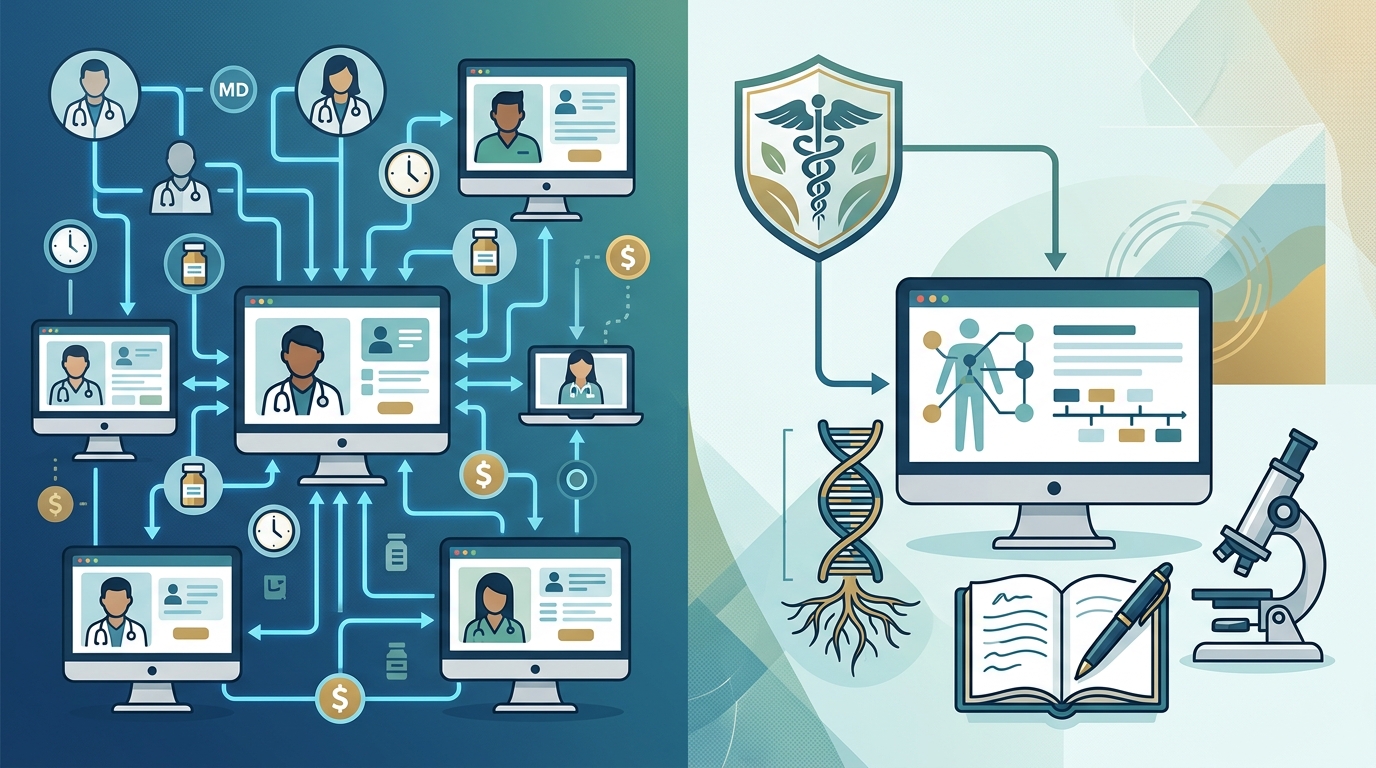
When comparing IFM-certified telemedicine to other virtual health options, several structural differences emerge. These differences impact the quality of care, the duration of visits, and the overall patient experience. Understanding these distinctions helps patients avoid generic health apps that lack the nuance required for complex health issues.
| Feature | IFM-Certified Telemedicine | General Telehealth Apps | Traditional In-Person FM |
|---|---|---|---|
| Provider Training | Advanced Functional Medicine Certification | Standard Medical License | Advanced Functional Medicine Certification |
| Visit Duration | 60-90 Minutes | 15-20 Minutes | 60-90 Minutes |
| Diagnostic Approach | Root Cause Analysis | Symptom Management | Root Cause Analysis |
| Lab Testing | Specialized & Comprehensive | Basic or None | Specialized & Comprehensive |
| Personalization | Highly Individualized | Standardized Protocols | Highly Individualized |
The table above highlights the critical disparities in care quality. IFM-certified telemedicine offers a level of personalization and diagnostic depth that general telehealth apps cannot match. The extended visit times allow for a thorough exploration of your health history. This is essential for uncovering the subtle connections between your symptoms and your lifestyle.
Evaluating IFM-Certified Providers
Not all providers claiming to offer functional medicine are IFM-certified. It is crucial to verify credentials before committing to a care plan. The IFM website maintains a public directory of certified practitioners. You can search this directory to confirm a provider's status and specialization. This verification step protects you from practitioners who may use the term "functional" loosely without the requisite training.
When evaluating a provider, look for specific indicators of expertise. These include their years of experience in functional medicine, their approach to lab interpretation, and their philosophy on nutrition and lifestyle interventions. A reputable provider will be transparent about their methodology and willing to explain how they tailor treatments to your unique biology. They should also have a clear process for handling emergencies or acute issues that arise during virtual care.
At Direct Integrative Care, we prioritize this rigorous standard. Our practice is built on the foundation of integrative functional medicine principles. We ensure that every patient receives care from providers who are deeply trained in this specialized field. Our approach combines the convenience of virtual assessment with the depth of traditional functional medicine. This ensures that you receive comprehensive care regardless of your location. You can learn more about our specific services and philosophy by visiting our main page or reviewing our web disclosures for full transparency.
Benefits of Virtual IFM Care
Choosing IFM-certified telemedicine offers numerous advantages over traditional in-person visits. The primary benefit is accessibility. Patients from diverse geographic locations can access top-tier functional medicine expertise without the burden of travel. This is particularly beneficial for those living in areas with limited specialist availability.
Another significant advantage is the flexibility of scheduling. Virtual appointments can often be arranged more quickly than in-person visits. This allows for timely interventions when health issues arise. Additionally, the virtual format can reduce stress for patients who find medical environments anxiety-inducing. Being in the comfort of your own home can facilitate more open and honest communication with your provider.
Furthermore, virtual care often integrates seamlessly with digital health tools. Providers can use secure patient portals to share lab results, educational materials, and personalized health plans. This digital integration enhances patient engagement and adherence to treatment protocols. For more information on how we facilitate these virtual assessments, please review our Virtual Assessment Form page.
Key Takeaways
- IFM Certification ensures providers have completed advanced training in functional medicine methodology.
- Virtual functional medicine offers the same depth of care as in-person visits with greater accessibility.
- General telehealth apps often lack the specialized training required for root-cause analysis.
- Always verify a provider's IFM certification status through the official Institute directory.
- IFM-certified telemedicine typically involves longer, more comprehensive consultation times.
- Specialized laboratory testing is a core component of functional medicine, regardless of the care setting.
- Direct Integrative Care offers virtual assessments that maintain high standards of functional care.
Frequently Asked Questions
What is the difference between functional medicine and conventional medicine?
Functional medicine focuses on identifying and addressing the root causes of disease through a systems biology approach. Conventional medicine often focuses on symptom management and disease-specific treatment protocols. Functional medicine considers the complex interactions between genetics, environment, and lifestyle.
Is IFM certification required for functional medicine?
While not legally required, IFM certification is the gold standard for demonstrating expertise in functional medicine. It ensures that practitioners have undergone rigorous training and adhere to high ethical and professional standards.
Can I get functional medicine care through telemedicine?
Yes, many aspects of functional medicine can be effectively delivered through telemedicine. This includes consultations, lab review, and lifestyle coaching. However, certain physical exams or hands-on therapies may require in-person visits.
How do I verify a provider's IFM certification?
You can verify a provider's certification by searching the Institute for Functional Medicine's public practitioner directory. This ensures that the provider has met the necessary educational and professional requirements.
What types of conditions can be treated with IFM-certified telemedicine?
IFM-certified telemedicine can address a wide range of conditions, including autoimmune disorders, hormonal imbalances, digestive issues, and metabolic syndrome. The focus is on personalized care rather than a one-size-fits-all approach.
Do I need to be in a specific location to receive virtual care?
You typically need to be located in a state where the provider is licensed to practice. Most IFM-certified providers are licensed in multiple states to accommodate a broader patient base. Check with the provider for their specific licensing coverage.
What should I expect during a virtual functional medicine consultation?
Expect a lengthy initial consultation, often lasting 60 to 90 minutes. The provider will review your health history, discuss your symptoms, and outline a plan for specialized testing. Follow-up visits will focus on interpreting results and adjusting your treatment plan.
Contact Us
If you are ready to explore the benefits of IFM-certified telemedicine, we invite you to take the next step. Our team at Direct Integrative Care is dedicated to providing high-quality, personalized functional medicine care. We offer virtual assessments that are designed to uncover the root causes of your health concerns. To begin your journey toward better health, please complete our Virtual Assessment Form. For any immediate questions, you can reach us by phone or text at (210) 981-6106.