

Why Root Cause MCAS Telemedicine Costs Less Than Traditional Visits
The Hidden Costs of Insurance-Based Care
Membership Models vs. Per-Visit Billing
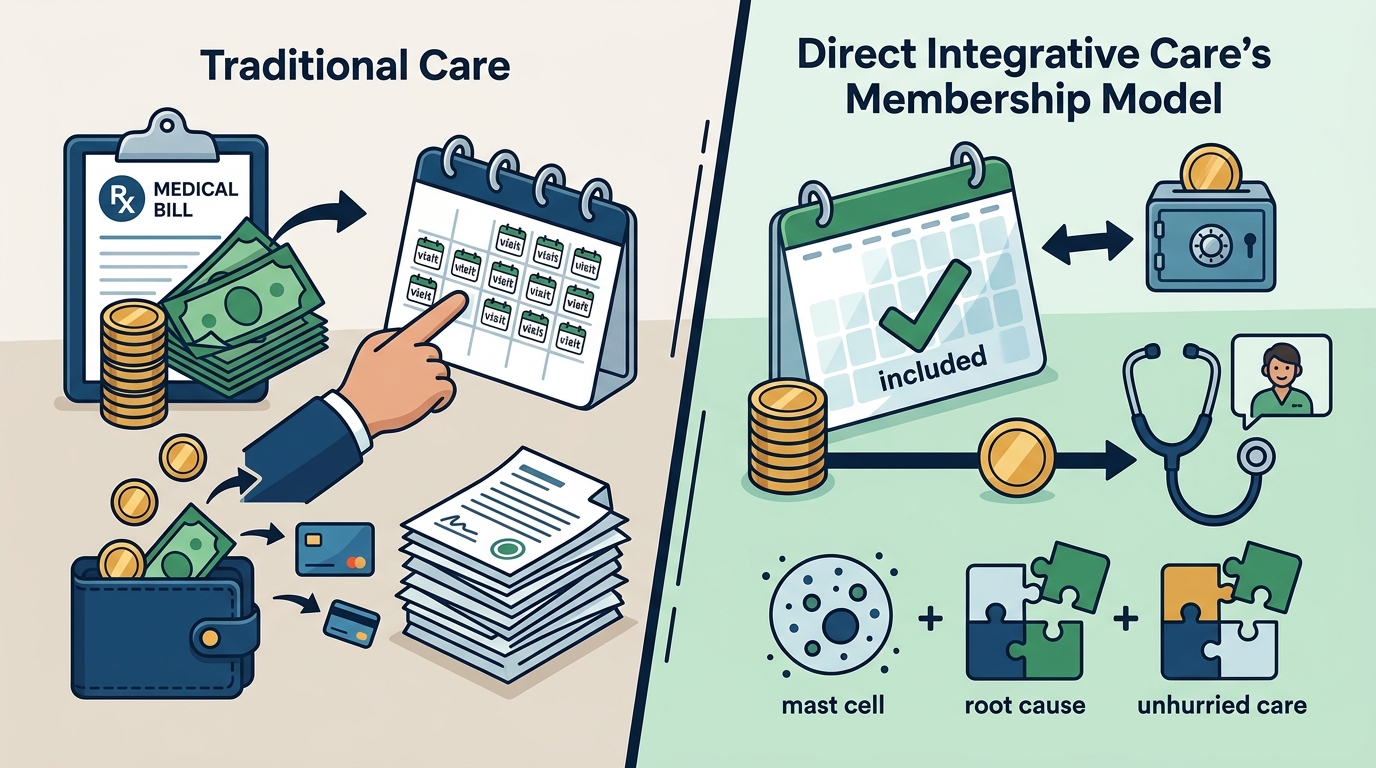
A direct primary care or membership model is a financial arrangement where patients pay a fixed monthly fee for access to a physician. This model is distinct from insurance because it does not involve risk pooling or third-party reimbursement. For patients with complex conditions like MCAS, per-visit billing can become prohibitively expensive. A single specialist visit might cost several hundred dollars, and managing MCAS often requires frequent check-ins to adjust treatment protocols. With a membership model, the cost is spread out over the month. This creates financial predictability. Patients know exactly what they are paying for, and there are no surprise bills after the visit. The fee covers the time spent in consultation, which is the primary value in a telemedicine setting. For additional details, review the Customer Experience.
Telemedicine Eliminates Facility Fees
Focus on Root Causes Reduces Long-Term Spending
MCAS is a complex condition that often involves multiple systems in the body. Traditional care may treat symptoms in isolation, leading to repeated visits and multiple specialist referrals. A root cause approach is a diagnostic strategy that seeks to identify and address the underlying triggers of a disease. By identifying the specific drivers of MCAS, such as environmental exposures or immune dysregulation, the physician can create a targeted treatment plan. This approach may reduce the need for multiple specialist visits over time. While the initial investment in comprehensive testing and consultation may be higher than a single symptom-focused visit, the long-term cost savings can be significant. Patients often find that addressing the root cause leads to better symptom management and a reduced reliance on emergency care or frequent specialist appointments. For additional details, review the Frequently Asked Questions.
Transparency in Pricing and Services
Key Takeaways
- Membership models remove insurance administrative overhead, leading to lower overall costs. For additional details, review the About.
- Telemedicine eliminates facility fees, which are a major component of traditional visit costs.
- A root cause approach may reduce the need for frequent specialist referrals over time.
- Transparent pricing allows for better financial planning and predictability.
- Direct membership is a consultative service that works alongside primary care, not a replacement for it.
- Membership fees do not cover lab tests, medications, or third-party services.
Frequently Asked Questions
Is a direct membership model considered health insurance?
No. A direct membership is a contract for physician services. It is not health insurance, a health plan, or a discount medical plan. It does not satisfy legal requirements for health coverage. Members are encouraged to maintain separate health insurance for hospitalization and emergency care.
Does the membership fee cover lab tests and medications?
No. The membership fee covers physician consultation services. Laboratory testing, imaging, medications, supplements, and third-party services are not included in the membership fee and must be paid for separately.
Can I use my HSA or FSA to pay for the membership?
You should consult your own tax advisor regarding HSA or FSA eligibility. The practice does not provide tax advice. Some members may be able to use these accounts, but it depends on individual circumstances and tax laws.
Is this practice a replacement for my primary care physician?
No. This is a consultative integrative and functional medicine practice. It does not replace your primary care physician. Members are expected to maintain an established relationship with a primary care clinician for acute illness, preventive screening, and overall care coordination.
What states are covered by the telemedicine service?
The practice serves patients in Texas, Iowa, Illinois, Missouri, Georgia, and Florida. You must be physically located in one of these states at the time of each consultation. The physician holds an active medical license in these jurisdictions.
How does a root cause approach differ from traditional symptom management?
Traditional care often focuses on managing symptoms as they appear. A root cause approach seeks to identify the underlying triggers of the condition. This may involve a more comprehensive diagnostic process and a targeted treatment plan designed to address the source of the symptoms.