
Telemedicine Integrative Oncology in Texas: A Functional Medicine Guide
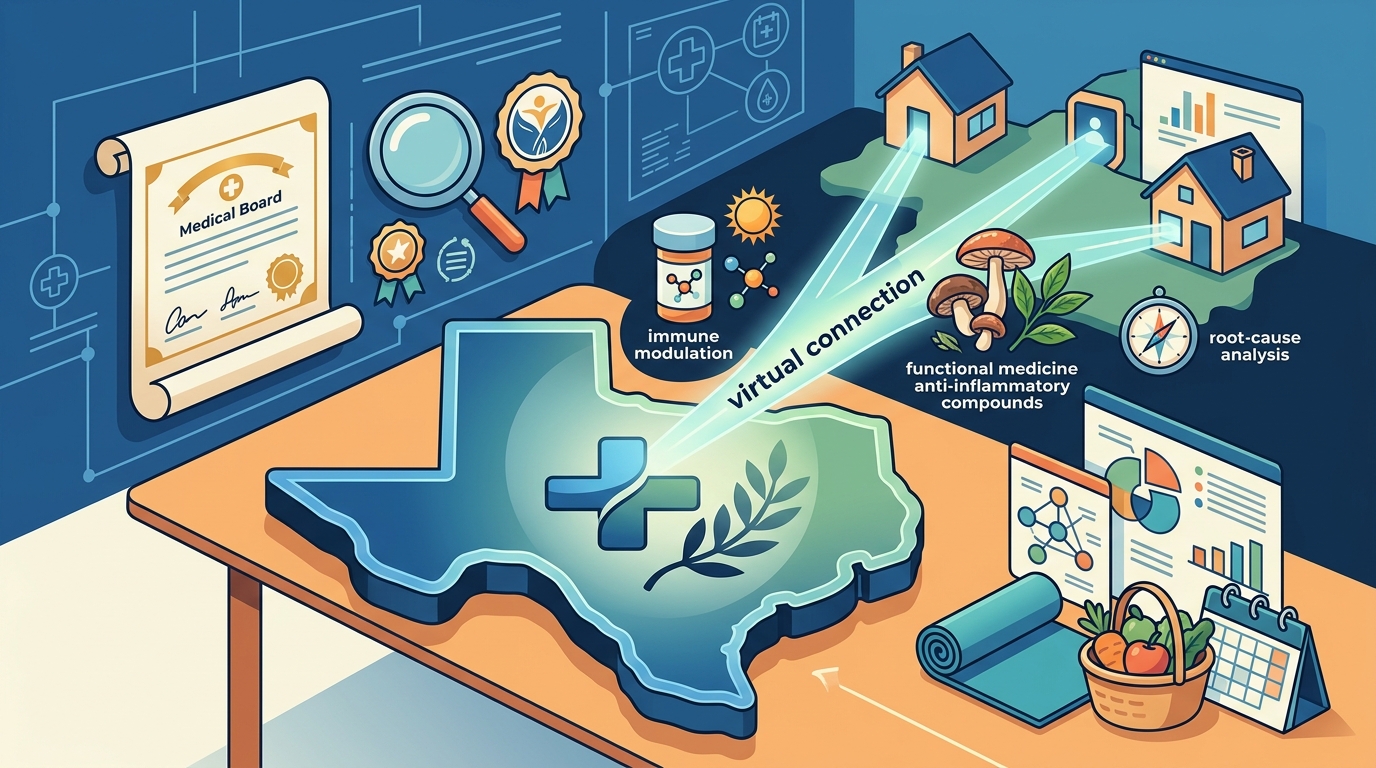
Telemedicine integrative oncology in Texas is a specialized field where licensed physicians use virtual platforms to combine conventional cancer care with evidence-based functional medicine strategies. This approach focuses on root-cause analysis, immune modulation, and lifestyle interventions to support patients alongside their primary oncology teams. This guide covers how to evaluate providers, verify credentials, understand the telemedicine workflow, and navigate the specific regulatory and clinical landscape of Texas-based virtual integrative oncology.
How to Choose a Provider
Selecting a telemedicine provider for integrative oncology requires looking beyond marketing language. A qualified physician must hold a valid medical license in the state where you are physically located during the consultation. In Texas, this means the doctor must be licensed by the Texas Medical Board. You should look for board certification in integrative medicine, such as from the American Board of Integrative and Holistic Medicine, or a fellowship from a recognized institution like the Osher Center for Integrative Medicine. The provider should explicitly state that their services are consultative and work alongside your primary oncologist, not replace them. Avoid providers who promise cures or guarantee outcomes, as these claims are red flags for unverified or dangerous practices.
What to Ask Before Committing
Before scheduling a consultation, ask specific questions to gauge the provider's methodology. Inquire about their approach to immune modulation and whether they use low-dose naltrexone (LDN) or other off-label therapies. Ask how they coordinate with your current oncology team and whether they require a copy of your pathology reports. Clarify the scope of services included in the membership or consultation fee. Ensure the provider uses a secure, HIPAA-compliant telemedicine platform. Ask about their experience with your specific cancer type and whether they have published research or case studies in that area.
How to Verify Credentials
Verification is critical in a field where unlicensed practitioners sometimes operate. Check the physician's license status on the Texas Medical Board website or the Federation of State Medical Boards. Verify board certifications through the American Board of Integrative and Holistic Medicine or the American Board of Preventive Medicine. Look for affiliations with reputable institutions, such as the University of Arizona Center for Integrative Medicine or the Institute for Functional Medicine. If the provider claims to be a specialist in a specific modality, such as medical acupuncture, verify that certification through the issuing body, such as the National Certification Commission for Acupuncture and Oriental Medicine.
How Telemedicine Care Works
The telemedicine workflow typically begins with an initial comprehensive history and review of existing medical records. The physician will order advanced functional medicine lab tests, which you can complete at a local lab in Texas. Results are reviewed in a follow-up video consultation where a personalized treatment plan is developed. This plan may include dietary changes, targeted supplementation, and immune-modulating therapies. Ongoing care involves regular check-ins, secure messaging for questions between visits, and adjustments to the protocol based on lab trends and symptom changes. The process is iterative, with goals set for short-term symptom management and long-term health optimization. according to Governor Abbott Waives
What It Costs
Costs for telemedicine integrative oncology vary based on the practice model. Membership-based direct care practices often charge a flat monthly fee that covers unlimited access to the physician, secure messaging, and standard consultations. This model removes the per-visit billing structure of traditional insurance. The fee typically does not cover the cost of lab tests, which are billed separately to you or your insurance. Compounded medications, such as low-dose naltrexone, are prescribed and filled at a local pharmacy, with costs varying by pharmacy. It is essential to ask for a transparent breakdown of all fees before starting care to avoid unexpected expenses. according to The Cherng Family
Common Mistakes to Avoid
One common mistake is assuming that integrative medicine replaces conventional cancer treatment. Integrative oncology is designed to work alongside chemotherapy, radiation, and surgery, not instead of them. Another error is failing to disclose all current medications and supplements to the integrative physician, which can lead to dangerous interactions. Patients should also avoid providers who do not require a physical examination or lab work before prescribing. Finally, do not stop your conventional treatments without explicit guidance from your oncologist. The goal is synergy, not substitution.
Versus In-Person and Conventional Care
| Feature | Telemedicine Integrative Oncology | In-Person Conventional Oncology |
|---|---|---|
| Access Frequency | High, often with secure messaging | Low, scheduled visits only |
| Focus | Root cause, lifestyle, immune support | Tumor control, acute management |
| Coordination | Requires active patient coordination | Managed within hospital system |
| Cost Structure | Membership or flat fee | Insurance-based, variable |
Telemedicine offers greater flexibility and access to specialized integrative knowledge, which is often scarce in conventional hospital settings. However, it lacks the ability to perform physical examinations or procedures. Conventional care remains the backbone of cancer treatment, providing the necessary infrastructure for diagnostics and acute interventions. The most effective approach often combines both, using telemedicine for ongoing support and conventional care for primary treatment.
For Specific Patient Situations
For patients with autoimmune conditions overlapping with cancer, such as those with mast cell activation syndrome, a functional medicine approach can help manage the complex immune dysregulation. For those with chronic fatigue or brain fog, targeted mitochondrial support and stress physiology work may improve quality of life. Patients with mold-related illness may benefit from environmental assessment and detoxification protocols. In each case, the provider must tailor the strategy to the individual's unique biology and history, rather than applying a one-size-fits-all protocol.
Rules and Patient Protections
Telemedicine in Texas is governed by state medical board regulations and federal HIPAA laws. Patients have the right to privacy and security of their health information. The physician must be physically located in a state where they are licensed, but the patient must be in the state where the physician is licensed to practice. In Texas, this means the patient must be in Texas during the consultation. Patients should ensure that the telemedicine platform used is HIPAA-compliant. They also have the right to withdraw from care at any time and to request their medical records.
Local Specifics for Texas
Texas has specific regulations regarding telemedicine, including requirements for a valid patient-physician relationship. The Texas Medical Board has issued guidance on the use of telemedicine for chronic conditions and integrative care. Patients in Texas can access care from physicians licensed in the state, even if the physician is based in another location, provided the patient is in Texas during the visit. Local labs in Texas can perform the necessary functional medicine tests, and results can be transmitted securely to the physician. Understanding these local nuances ensures that care is legally compliant and accessible.
Timing and Treatment Windows
Timing is crucial in integrative oncology. Starting support protocols before or during conventional treatment can help mitigate side effects and improve tolerance. For example, using anti-inflammatory strategies before chemotherapy may reduce the risk of certain adverse events. However, some interventions may need to be paused during active treatment to avoid interactions. The physician will help determine the optimal timing for each component of the plan. Early engagement with an integrative provider allows for a more comprehensive and timely response to the patient's needs.
Results Over Time
Outcomes in integrative oncology are often measured in quality of life, symptom reduction, and functional capacity rather than just tumor markers. Patients may experience improvements in energy, sleep, and mood within weeks of starting a personalized protocol. Long-term results depend on adherence to lifestyle changes and ongoing monitoring. The goal is to support the body's natural healing processes and enhance resilience. Regular lab work and clinical assessments help track progress and adjust the plan as needed. While integrative medicine does not replace conventional cancer treatment, it can significantly improve the patient's overall well-being and ability to endure treatment.
Key Takeaways
- Verify the physician's Texas medical license and board certifications in integrative medicine.
- Ensure the provider works alongside your primary oncologist, not instead of them.
- Use a HIPAA-compliant telemedicine platform for secure consultations.
- Understand the cost structure, including membership fees and separate lab costs.
- Disclose all medications and supplements to avoid dangerous interactions.
- Be physically located in Texas during each consultation to comply with state regulations.
- Focus on quality of life and symptom management as key outcomes.
- Coordinate closely with your conventional oncology team for the best results.
Frequently Asked Questions
Is telemedicine integrative oncology covered by insurance?
Most insurance plans do not cover integrative medicine services, as they are often considered complementary rather than standard care. Membership-based practices typically operate outside the insurance system, charging a flat fee for access to the physician. Lab tests and medications may be covered by insurance, but the consultation and planning services are usually out-of-pocket.
Can I see a doctor in another state if I live in Texas?
No, you must be physically located in Texas during the consultation if the physician is licensed in Texas. If the physician is licensed in another state, you must be in that state during the visit. This is a legal requirement to ensure proper medical oversight and liability.
What is low-dose naltrexone (LDN) used for in oncology?
LDN is an off-label therapy used to modulate the immune system and reduce inflammation. It may help manage symptoms such as pain, fatigue, and brain fog in cancer patients. It is not a cancer treatment itself but a supportive therapy that works alongside conventional care.
How often will I need to see the telemedicine provider?
Frequency depends on the practice model and your specific needs. Membership-based practices often offer unlimited access via secure messaging and regular video consultations, such as monthly or quarterly. The provider will establish a schedule based on your treatment phase and progress.
Do I need to stop my conventional cancer treatment?
No, you should not stop your conventional cancer treatment. Integrative oncology is designed to work alongside chemotherapy, radiation, and surgery. Stopping conventional treatment without medical guidance can be dangerous. Always coordinate with your oncologist before making any changes to your care plan.
What labs are typically ordered in functional medicine?
Functional medicine labs may include comprehensive metabolic panels, inflammatory markers, hormonal profiles, gut health tests, and nutrient levels. These tests help identify underlying imbalances that may be contributing to symptoms or affecting treatment tolerance. The specific labs ordered depend on your individual health history and current condition.
Next Steps
If you are seeking integrative oncology support in Texas, consider consulting with a qualified provider like Direct Integrative Care. They offer telemedicine services with a focus on root-cause medicine and immune modulation. To learn more about their approach, you can read their guide to integrative oncology or explore specific protocols. For those in the San Antonio area, Discovering San Antonio Functional Medicine with Dr. Kim provides local context. You can also find functional medicine expertise in San Antonio through their directory. To get started, book an appointment online to discuss your specific needs.